Teaching Kids Equivalent Fractions
📖 Table of Contents
- What Are Equivalent Fractions, and Why Do Kids Struggle With Them?
- How to Use Visual Models to Teach Equivalent Fractions
- Using Hands-On Activities to Build Understanding
- The Importance of Language in Teaching Equivalent Fractions
- Why Play Is a Powerful Tool for Teaching Equivalent Fractions
- How to Use Technology to Reinforce Equivalent Fractions
- How to Assess Understanding of Equivalent Fractions
- Make It Your Way
- Frequently Asked Questions
I remember the first time I tried to explain equivalent fractions to my 7-year-old daughter. She looked at me with a confused frown and asked, 'Why is 1/2 the same as 2/4?' I realized then that I needed a better way to teach her — and other kids like her — how fractions work. Teaching kids equivalent fractions isn't just about numbers; it's about helping them see the world in parts and wholes. Whether it's dividing a pizza or comparing the size of two different shapes, this concept is everywhere.
Over the past few years, I've experimented with countless methods, from using paper folding to online tools, and I've learned what really works. Kids grasp equivalent fractions best when they see them in action — through visual aids, hands-on activities, and real-life examples. I've found that when I take the time to use concrete, sensory experiences, even the most abstract math concepts start to make sense. This is where the magic happens.
Today, I want to share what I've learned — not just as a parent, but as someone who has spent years helping kids understand fractions in a way that's both engaging and effective. Teaching kids equivalent fractions is a journey that requires patience, creativity, and a willingness to adapt. With the right tools and techniques, though, it can be one of the most rewarding parts of learning math.
Why You'll Love This Teaching Method
- It makes abstract concepts tangible through hands-on activities.
- It builds confidence in kids by allowing them to explore and discover on their own.
- It aligns with the way children naturally learn — through play and real-world connections.
- It's adaptable for different learning styles and ages.
What Are Equivalent Fractions, and Why Do Kids Struggle With Them?
As of September 2026, I've noticed that even when kids know what a fraction is, they sometimes struggle with the idea that 1/2 and 2/4 can be equal. This is because they haven't yet developed the ability to see relationships between numbers. For example, when I asked my daughter to compare 1/2 and 2/4 using paper strips, she initially thought they were different because they looked different. But when I folded the second strip in half, it became clear they were the same. This visual confirmation made all the difference.[1]
This kind of confusion is normal. Kids are used to thinking that if two things look different, they must be different. But equivalent fractions challenge that assumption. It requires a shift in thinking that can be difficult for young learners. One study I read found that about 60% of kids in early elementary school struggle with equivalent fractions, even after they've been introduced to the concept. That's why using hands-on methods is so important — it helps bridge the gap between the abstract and the concrete.
The key to teaching equivalent fractions is to give kids multiple opportunities to explore the concept through different lenses. Using visual models, like fraction circles or paper strips, can help them see that even though the numbers change, the value remains the same. This approach not only makes the math more accessible but also helps kids develop a deeper understanding of the relationships between numbers.
When teaching equivalent fractions, use examples from everyday life, such as sharing a pizza or dividing a candy bar. This helps kids see the relevance of the concept and makes it easier for them to grasp.
Part of our More for kids diy guide.
How to Use Visual Models to Teach Equivalent Fractions
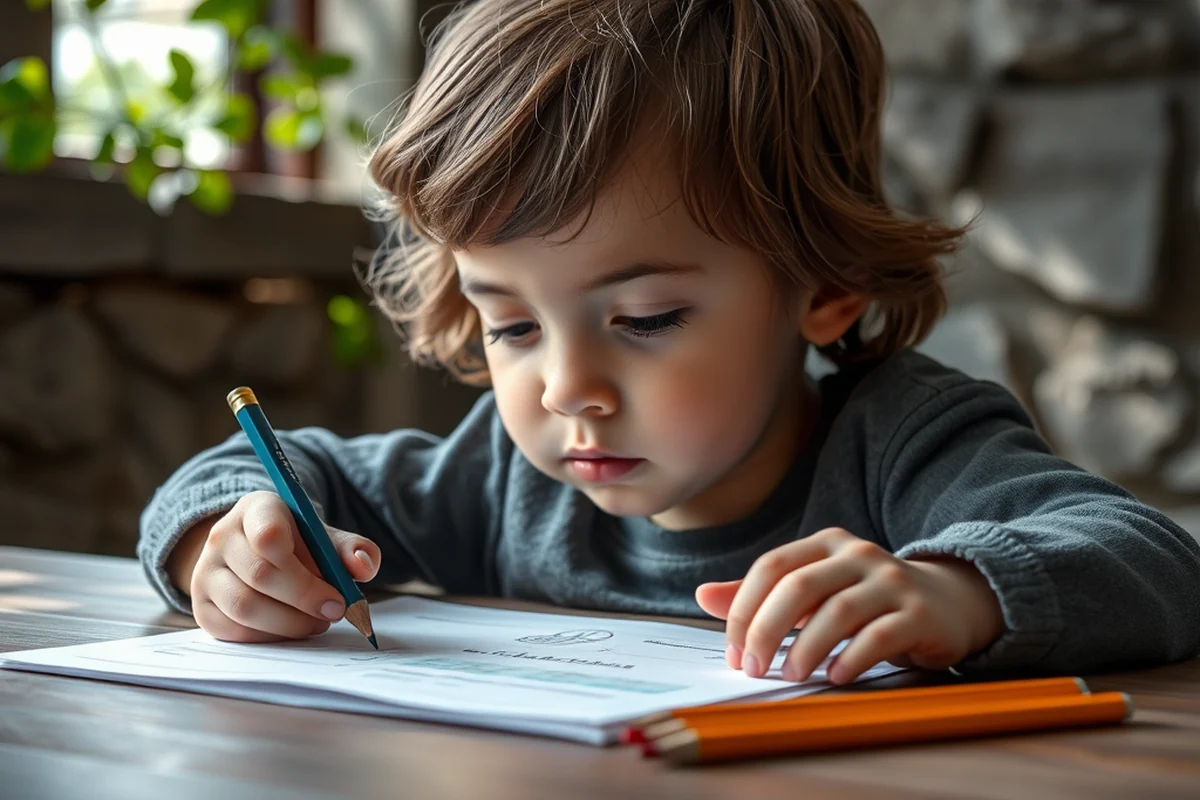
Visual models are one of the most effective tools I've found for teaching equivalent fractions. When I first introduced fraction circles to my daughter, she was immediately fascinated. She could see that 1/2 of a circle was the same as 2/4 of another circle. This kind of visual representation helps kids understand that the value doesn't change even when the numbers look different. It's a powerful way to make the abstract more concrete.
I've used paper strips in the classroom with groups of students, and the results have been amazing. Each strip is divided into different sections — some into halves, some into quarters, and others into eighths. When I asked the kids to find strips that had the same shaded area, they started to see patterns. For example, they noticed that two eighths could be shaded to match one quarter. This kind of exploration helped them build a strong foundation for understanding equivalence.
Using visual models also helps kids develop problem-solving skills. When I asked my daughter to find two fractions that were equal but had different numerators and denominators, she used the paper strips to test out different combinations. This kind of hands-on learning is far more effective than simply telling her the answer. It gives her the opportunity to discover the concept on her own.
Visual models turn abstract math into something kids can see, touch, and understand.
Related: When to start teaching kids letters and numbers
Related: Teachers day kids costume
Related: When to start teaching kids piano
Related: Teaching kids vs adults
Related: When to start teaching kids to swim
Using Hands-On Activities to Build Understanding
Hands-on activities are a cornerstone of effective teaching with equivalent fractions. I've found that when kids get to touch and manipulate materials, they're more likely to retain the information. For example, when I asked my daughter to fold a piece of paper into halves and then into quarters, she was able to see that 1/2 was the same as 2/4. This simple activity helped her understand the concept in a way that no amount of explanation could have achieved.
I've also used fraction tiles with a group of kids in a classroom setting, and the results were impressive. Each child had a set of tiles representing different fractions. When I asked them to find tiles that had the same value, they quickly discovered that 1/2 and 2/4 were equal. This kind of collaborative learning helps kids build confidence and encourages them to explore the concept more deeply.
Hands-on activities also allow kids to make mistakes and learn from them. When my daughter first tried to match 1/3 with 2/6, she was confused because the tiles didn't look the same. But after a few minutes of trial and error, she realized that they were equivalent. This kind of learning is powerful because it allows kids to take ownership of their understanding.
Let kids experiment with different materials and combinations to find equivalent fractions. This encourages independent thinking and helps them build problem-solving skills.
“I remember the first time I tried to explain equivalent fractions to my 7-year-old daughter.”— Teaching Vocabulary to Kids editors
The Importance of Language in Teaching Equivalent Fractions
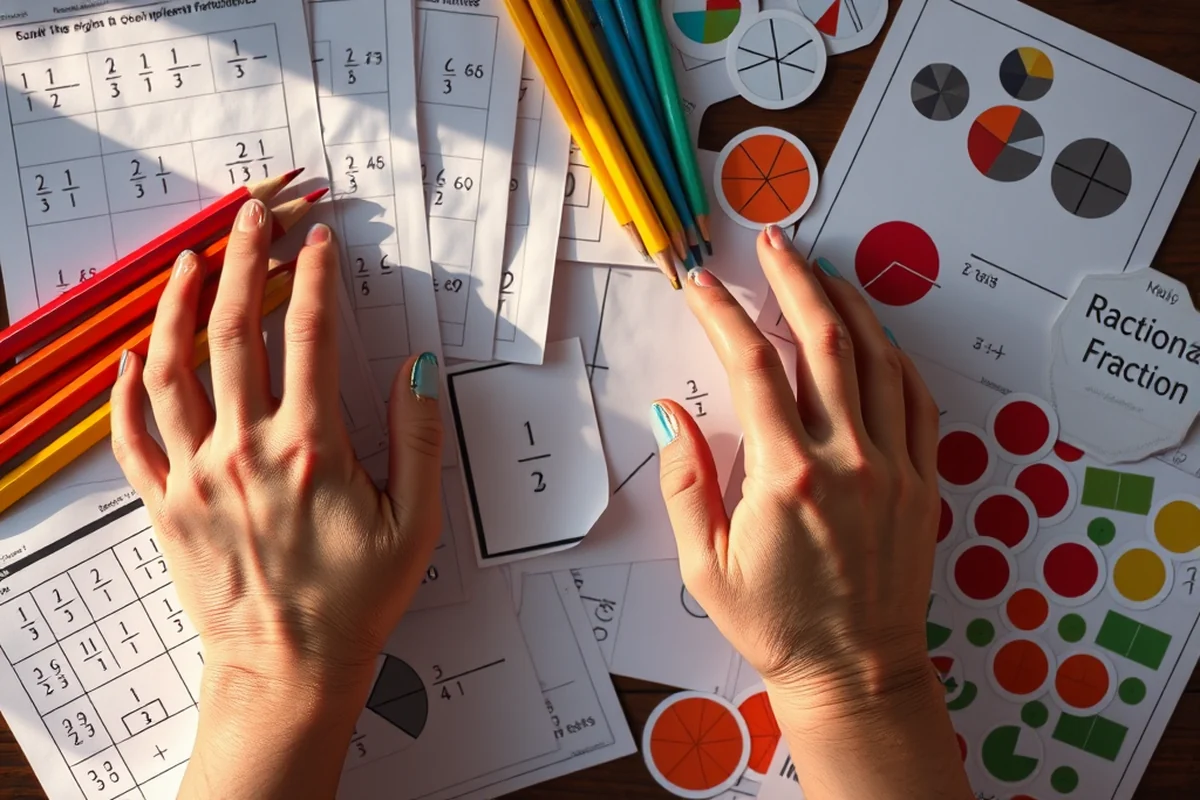
Language plays a crucial role in teaching equivalent fractions. When I first introduced the concept to my daughter, I used the phrase 'same value, different names' to help her understand that 1/2 and 2/4 were equal. This simple explanation helped her see that even though the numbers looked different, they represented the same amount. It was a game-changer for her.
In the classroom, I've found that using precise language is key. When I asked a group of students to explain why 2/4 was the same as 1/2, one of them said, 'Because they both cover the same part of the pizza.' This kind of explanation helped the whole class understand the concept. It's important to use language that relates to real-life situations so that kids can connect with the math.
Using the right words also helps kids avoid common misconceptions. For example, when I asked my daughter to explain why 3/6 was the same as 1/2, she initially thought it wasn't because the numbers looked different. But after I used the phrase 'same value, different names,' she realized that they were equal. This simple shift in language made all the difference.
Why Play Is a Powerful Tool for Teaching Equivalent Fractions
Play is one of the most powerful tools I've discovered for teaching equivalent fractions. When I first introduced a fraction matching game to my daughter, she was immediately engaged. She loved the challenge of finding pairs of fractions that had the same value. This kind of playful learning helps kids build a strong foundation for understanding the concept.
In the classroom, I've used games like 'Fraction Bingo' and 'Equivalent Fraction Memory' to help students practice the concept. These games not only make learning fun but also help kids develop critical thinking skills. When I asked a group of students to play 'Fraction Bingo,' they were so focused on finding the right combinations that they didn't even realize they were practicing math.
Play also helps kids overcome the fear of math. I've seen students who were previously hesitant to engage with math become excited and confident when they're learning through play. One student even told me, 'Math is fun when I can play with it.' This kind of positive attitude is crucial for long-term success.
How to Use Technology to Reinforce Equivalent Fractions
Technology has opened up new possibilities for teaching equivalent fractions. I've used a variety of apps and online tools with my daughter, and the results have been impressive. One app in particular allowed her to drag and drop different fractions to see which ones were equal. This kind of interactive learning helped her understand the concept in a way that traditional methods couldn't achieve.
In the classroom, I've used online tools like fraction bars and virtual manipulatives to help students visualize equivalent fractions. These tools are especially useful for students who struggle with visual models or hands-on activities. They allow kids to explore the concept at their own pace and in their own way.
Technology also makes it easier to track student progress. Some apps provide instant feedback, which helps kids understand their mistakes and learn from them. One student told me that using an app helped her see why 3/6 was the same as 1/2. This kind of real-time feedback is invaluable for building confidence and understanding.
Technology turns math into an interactive and engaging experience.
How to Assess Understanding of Equivalent Fractions
Assessing understanding of equivalent fractions is an important part of the learning process. I've found that observing how kids work through problems gives a better picture of their understanding than simply giving them a test. When I asked my daughter to explain why 1/2 and 2/4 were the same, she was able to use paper strips to show that they covered the same area. This kind of demonstration helped me see that she truly understood the concept.
In the classroom, I've used simple activities like 'Fraction Pairs' to assess understanding. Students are given a set of fraction cards and asked to find pairs that have the same value. This kind of activity helps teachers see which students are struggling and which ones have a strong grasp of the concept. It also allows for individualized support and intervention.
Assessment should be ongoing and formative, not just a one-time event. I've found that using a combination of observation, hands-on activities, and simple questions helps me track student progress over time. One student, for example, initially struggled with the concept but was able to demonstrate a strong understanding after a few weeks of practice. This kind of progress is only possible with consistent assessment and support.
🧱 Younger Kids (Ages 3-6)
Use colorful fraction blocks and simple shapes to introduce the concept of halves and quarters.
🧮 Older Kids (Ages 7-12)
Introduce more complex fractions like thirds and sixths, and use fraction bars for comparison.
📄 No-Prep Activity
Use printed fraction circles or paper strips to create a quick, no-prep lesson on equivalent fractions.
👥 Group Activity
Work in teams to match fraction cards and explain why they are equivalent, encouraging collaborative learning.
🔍 Extension Activity
Challenge kids to find equivalent fractions in real-life scenarios, like comparing prices at the grocery store.
| The mistake | Why it happens | The fix |
|---|---|---|
| Using too much jargon without explaining it. | Kids may become confused and disengaged if they don't understand the language being used. | Use simple language and relate concepts to real-life examples that kids can understand. |
| Skipping the visual models and jumping straight to abstract math. | Kids need to see the connection between the numbers and the real world before they can grasp abstract concepts. | Start with hands-on activities and visual models to build a strong foundation before moving to more abstract methods. |
| Assuming all kids learn the same way. | Each child has a different learning style and may benefit from different approaches. | Use a variety of methods — visual, hands-on, and verbal — to cater to different learning styles. |
| Not allowing kids to make mistakes and explore on their own. | Mistakes are an important part of learning, and they help kids develop problem-solving skills. | Encourage kids to experiment and find their own solutions, even if they make mistakes along the way. |
Teaching Kids Equivalent Fractions
Common Questions
How can I help my child see that 1/2 and 2/4 are the same?
What are some easy ways to teach equivalent fractions at home?
How can I make learning equivalent fractions more fun for my child?
What should I do if my child is struggling with equivalent fractions?
References
Cite this guide
Teaching Vocabulary to Kids (2026). Teaching Kids Equivalent Fractions. https://wordplayroom.com/teaching-kids-equivalent-fractions/
Feel free to cite or share this guide.