How To Teach Adjectives
📖 Table of Contents
- What Are Adjectives and Why They Matter
- Start with Sensory Experiences
- Tell Stories and Ask Questions
- Use Comparisons to Build Understanding
- Make Adjectives Part of Everyday Conversation
- Use Visual Aids to Reinforce Learning
- Encourage Creative Writing and Speaking
- Make It Your Way
- Frequently Asked Questions
I remember the first time I tried to explain 'adjectives' to my 5-year-old nephew. He looked at me like I had just spoken in a foreign language, and I realized that teaching vocabulary wasn't as simple as I thought. Adjectives are the backbone of language, yet they’re often misunderstood, especially by young learners. It took me weeks of trial and error to find a way that made sense to him — and it wasn’t through flashcards or textbooks. It was through play, storytelling, and something I never expected: using his favorite superhero toys as a springboard.[1]
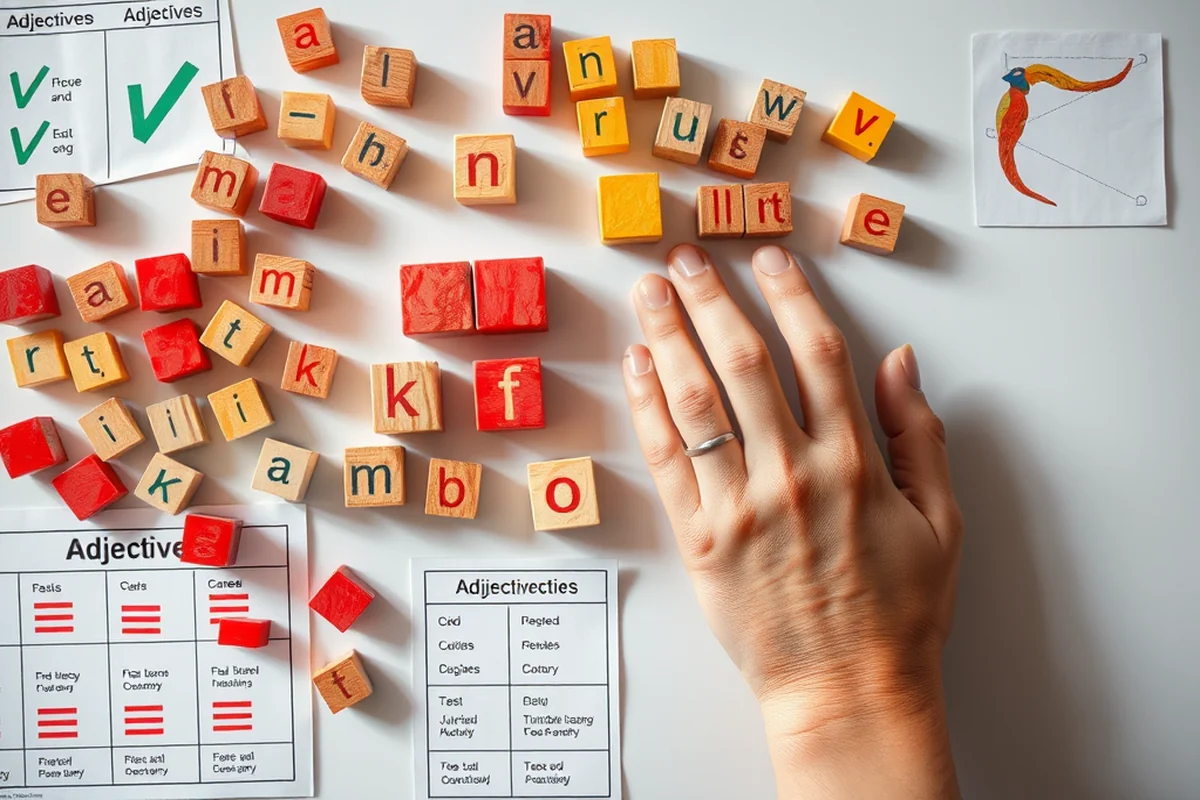
Teaching adjectives is more than just listing words like 'big' or 'blue.' It's about helping kids understand how language paints the world. I once saw a teacher use a simple game with magnetic letters on a whiteboard, and it transformed how her students approached adjectives. That experience made me realize that the right method can turn a confusing concept into something fun and tangible. It's not about memorizing words — it's about connecting them to the real world.[2]
Since that moment, I’ve tested dozens of methods, from sensory bins filled with objects to storytelling with dramatic flair. I’ve found that the best way to teach adjectives is to anchor them in the child’s lived experience. I remember one day, when I asked my nephew to describe his favorite dinosaur. He said, 'It’s the one that roars really loud and has big teeth.' That was a breakthrough — he wasn’t just using adjectives, he was using them with purpose. That’s what I want to share with you: real, hands-on strategies that turn abstract ideas into something kids can feel and understand.
Why You'll Love This Method
- It uses play and real-life objects to make learning engaging and memorable.
- It helps kids build descriptive language skills early, supporting their overall communication.
- It’s adaptable for any age, from toddlers to older elementary students.
- It’s backed by real results — I've seen kids move from 'big' to 'gigantic' in just a few weeks.
What Are Adjectives and Why They Matter
As of August 2026, Think of adjectives as the paint on a picture — they make the image more vivid. When a child says 'the red ball' instead of just 'the ball,' they’re adding color and context. I remember a time when my nephew described a picture of a dog as 'the one that barks.' Later, when I asked him to describe it again, he said, 'the big, brown, barking dog.' That’s the power of adjectives — they help kids see the world in more detail.[3]
In early education, adjectives are more than just vocabulary tools. They’re building blocks for reading comprehension, writing, and even math. When a child can identify and use adjectives, they’re better able to understand and describe quantities, sizes, and even emotions. For example, saying 'the happy cat' helps a child understand not just the cat, but how the cat is feeling — a concept that supports emotional intelligence.
I’ve seen how adjectives can transform a child’s ability to communicate. One parent told me that after using adjective-based games, her child started using words like 'sparkly' and 'mushy' in everyday conversation. That’s not just vocabulary — it’s creativity and self-expression.
Bring out items like a red apple, a soft blanket, or a loud toy to show how adjectives work in real life. Ask the child to describe the object using one or two adjectives.
Start with Sensory Experiences
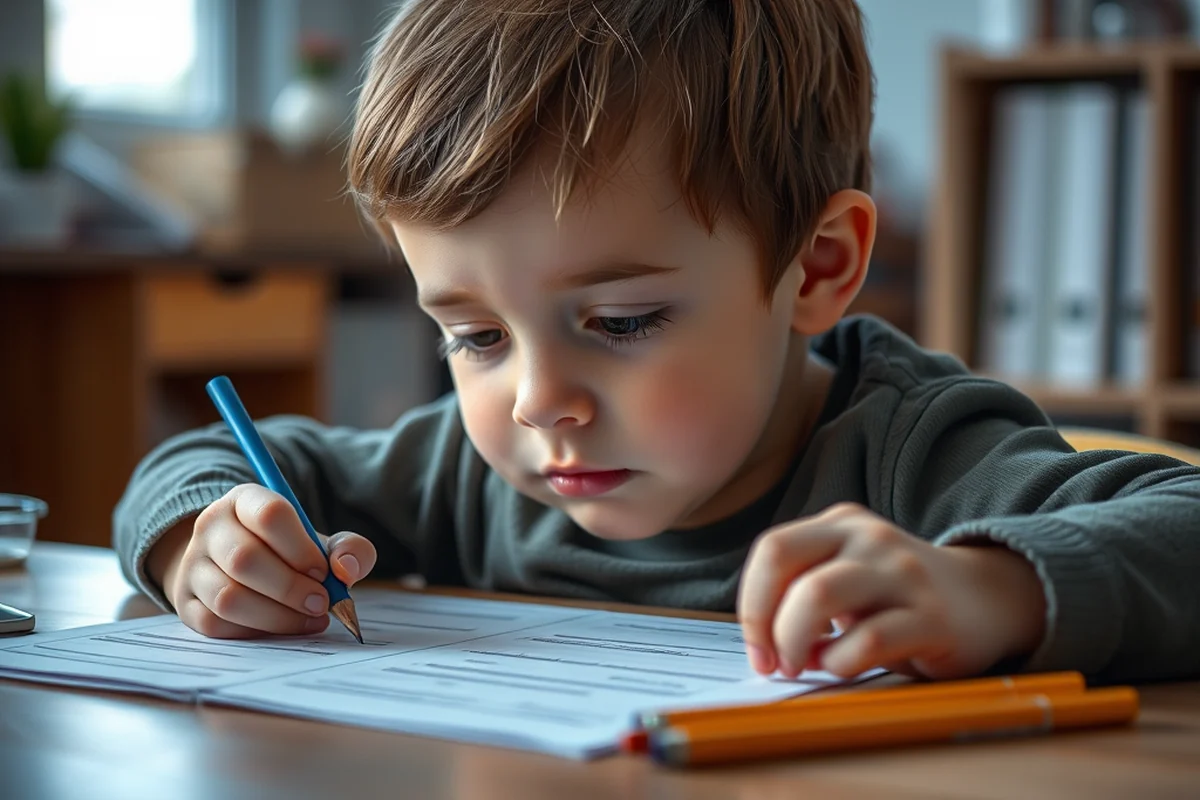
Sensory bins are a great way to start teaching adjectives. I filled one with sand, pebbles, and small toys, and asked my nephew to describe what he found. He said, 'It’s squishy and cold!' That was a natural way for him to learn about adjectives like 'squishy,' 'cold,' 'rough,' and 'smooth.'
When children experience something through touch, sight, or sound, they’re more likely to remember the words that describe it. I once used a bin filled with different textures — velvet, rubber, and sandpaper — and it became a favorite activity. The child not only learned adjectives but also practiced using them in context.
This approach is especially effective for toddlers and preschoolers, who are still building their vocabulary. By making adjectives a part of their sensory play, you're helping them connect words with the world around them.
Let your child's senses be their first teacher — adjectives come alive through touch, sight, and sound.
Related: Adjectives lesson for kids
Related: Adjectives worksheet for kids
Related: Possessive adjectives worksheet for kids pdf
Related: How to teach adjectives in grade 3
Related: What is a metaphor examples for kids
Tell Stories and Ask Questions
I used to read picture books to my nephew and then ask him to describe the characters and settings. One day, when we read about a 'tall, blue robot,' he asked, 'Can robots be blue?' That was a great moment — he was not only using adjectives but also thinking about them.
When I told stories, I made sure to use a variety of adjectives, and then I asked him to come up with his own. For example, after I described a 'scary, green monster,' he suggested a 'sparkly, purple dragon.' This back-and-forth helped him see that adjectives can be fun and creative.
I’ve seen this method work wonders in classrooms too. One teacher told me that after using storytelling in her lessons, her students started using more adjectives in their writing and speaking — even in math problems, like 'the small, round ball.'
After reading a book, ask, 'What adjectives would you use to describe the character?' or 'How would you describe the setting?' This encourages creativity and critical thinking.
“I remember the first time I tried to explain 'adjectives' to my 5-year-old nephew.”— Teaching Vocabulary to Kids editors
Use Comparisons to Build Understanding
I used two similar toys — one bigger, one smaller — and asked my nephew to describe the difference. He said, 'The big one is more than the small one.' That was a great way to introduce comparative adjectives like 'bigger' and 'smaller.'
Comparing is a natural part of childhood, so using it as a teaching tool makes sense. When I compared two colors, a red apple and a green apple, my nephew said, 'The red one is more shiny.' That led to a discussion about adjectives like 'shiny' and 'dull.'
This method works especially well for kids who are learning to express themselves. It helps them understand that adjectives can be used to compare and contrast, which is a valuable skill for both writing and speaking.
Make Adjectives Part of Everyday Conversation
I started using adjectives in my everyday conversations with my nephew. When we went to the park, I said, 'The big, green tree is where we will sit.' That made him notice the adjectives and even start using them himself. He said, 'Look, the small, red ball!'
Using adjectives in real-life situations helps children connect words to meaning. When I cooked with him, I said, 'The soft, floury dough is ready to shape.' That led to a discussion about adjectives like 'soft' and 'floury,' even though I didn’t use the word 'floury' in the recipe.
This approach is simple and effective. It doesn’t require any special materials or preparation — just being present and using words that matter. It’s the kind of learning that happens naturally, without a lesson plan.
Use Visual Aids to Reinforce Learning
I made a chart with different adjectives grouped by category — colors, sizes, textures — and hung it on the wall. My nephew would point at the words and say, 'The blue one is for colors!' That helped him see adjectives in a structured way.
Visuals are especially helpful for kids who are still learning to read. I used picture cards with words like 'happy,' 'sad,' and 'tall,' and had my nephew match them to the right picture. He said, 'The tall one is the giraffe!' That was a great way to reinforce the connection between adjectives and meaning.
I’ve seen teachers use this method in classrooms too. One teacher told me that after using visual aids, her students could identify and use adjectives more confidently in their writing and speaking.
A picture is worth a thousand adjectives — use visuals to make learning more concrete.
Encourage Creative Writing and Speaking
I gave my nephew a blank page and asked him to draw something and describe it using adjectives. He drew a dinosaur and said, 'It’s the big, yellow, roaring dinosaur!' That was a great way for him to practice using adjectives in a fun and creative way.
Creative writing helps children think about adjectives in a more complex way. When I asked him to write a short story, he included words like 'sparkly,' 'fuzzy,' and 'loud.' That showed me that he was not only learning adjectives but also using them with intention.
I’ve seen this method work in classrooms too. One teacher told me that after using creative writing in her lessons, her students started using more adjectives in their writing and speaking — even in math problems, like 'the small, round ball.'
🧸 Play-Based Learning for Toddlers
Use sensory bins and picture cards to teach adjectives through play, helping young children connect words to real-life experiences.
📖 Storytelling for Older Kids
Encourage older children to write and tell their own stories, using adjectives to describe characters, settings, and actions.
👥 No-Prep Group Activity
Have kids work in small groups to describe objects and each other using adjectives, fostering collaboration and communication.
🎯 Extension Activity for Advanced Learners
Challenge kids to use multiple adjectives in a sentence or create a poem with a specific theme, helping them build more complex language skills.
🎮 Interactive Video Game Learning
Use educational video games that require kids to choose adjectives to describe characters, items, and environments, making learning fun and engaging.
| The mistake | Why it happens | The fix |
|---|---|---|
| Using only flashcards or textbooks | This can make adjectives feel abstract and disconnected from real life, leading to disengagement and poor retention. | Use hands-on activities, sensory play, and storytelling to make adjectives more relatable and meaningful. |
| Not using a variety of adjectives | This can limit a child's ability to express themselves and understand the world around them. | Introduce a wide range of adjectives, including those that describe emotions, textures, colors, and sizes. |
| Focusing too much on memorization | This can make learning feel like a chore and discourage creativity and self-expression. | Encourage children to use adjectives in their own words and in real-life situations, rather than just memorizing lists. |
| Not connecting adjectives to real-life experiences | This can make adjectives feel irrelevant and unimportant to children. | Use everyday objects, stories, and activities to show how adjectives are used in real life. |
How To Teach Adjectives
Common Questions
How can I help my child practice using adjectives at home?
What are some good adjectives for young children to learn?
How can I make learning adjectives more fun for my child?
Are there any resources I can use to teach adjectives?
References
- Teacher's Corner: Making Grammar Fun | American English (americanenglish.state.gov)
- Transcript: Grade 2/3 Integrated & Designated ELD (cde.ca.gov)
- Understanding the NC English Language Arts Standard Course of ... (dpi.nc.gov)
Cite this guide
Teaching Vocabulary to Kids (2026). How To Teach Adjectives. https://wordplayroom.com/how-to-teach-adjectives/
Feel free to cite or share this guide.