
Teaching Vocabulary To Elementary Students

📖 Table of Contents
I still remember the first time I saw my third-grade student, Mia, use the word 'resilient' in a class discussion. She wasn’t just repeating it — she was using it with purpose, describing how she’d bounced back from a failed science experiment. Teaching vocabulary to elementary students isn’t just about expanding their word bank; it’s about giving them the tools to express themselves more clearly, think more deeply. Engage with the world around them. In my 10 years of teaching, I’ve learned that the right strategies can make a huge difference in how kids internalize and use new words.[1]
Vocabulary instruction has often been overlooked in early education, but research shows that it’s one of the most important predictors of academic success. In my classroom, I’ve experimented with a variety of methods — from visual aids to hands-on learning — and the ones that work best are the ones that make vocabulary feel meaningful and relevant. I’ve seen kids who were once hesitant to speak in class now confidently share their ideas, all because of a simple word they learned in a game or a story.[2]
Teaching vocabulary to elementary students is not a one-size-fits-all approach. It requires creativity, consistency, and a deep understanding of how young minds learn. Over the years, I’ve fine-tuned my methods, testing everything from flashcards with images to interactive storytelling. The goal is always the same: to help kids not only remember new words, but to use them in their own lives with confidence and clarity.[3]
Why You'll Love This Approach
- Interactive methods keep young learners engaged and excited about learning new words.
- Hands-on activities help children retain vocabulary more effectively than passive instruction.
- Games and stories make learning feel like fun, not work.
- Consistent practice leads to measurable improvements in language skills.
The Power of Context in Vocabulary Learning
As of November 2026, when I taught the word 'glisten' in my classroom, I didn’t just write it on the board — I used it in a story about a boy who found a diamond in the forest. The next day, during a science lesson about light, I pointed out how the sunlight glistened on the water. By the end of the week, several students were using the word in their own sentences. Context is key: it helps children connect words to real-life situations and retain their meaning.
I’ve found that using words in real-life scenarios — whether during a lesson, a conversation, or a game — makes them more memorable. For example, when teaching the word 'diligent,' I used it to describe a student who worked hard on a project. Then later, I used it again when talking about how scientists are diligent in their research. This repetition in different contexts helped the students understand the word more deeply.
Another strategy I’ve used is to create anchor charts with words and their meanings, along with images or examples. These charts are displayed in the classroom and referred to throughout the day. One of my students, who had trouble with reading, started recognizing the words on the charts and was soon using them in her writing.
Incorporate new words into everyday conversations and lessons. This helps students see the value of vocabulary in their own lives.
Part of our Vocabulary grammar guide.
Games That Make Vocabulary Fun
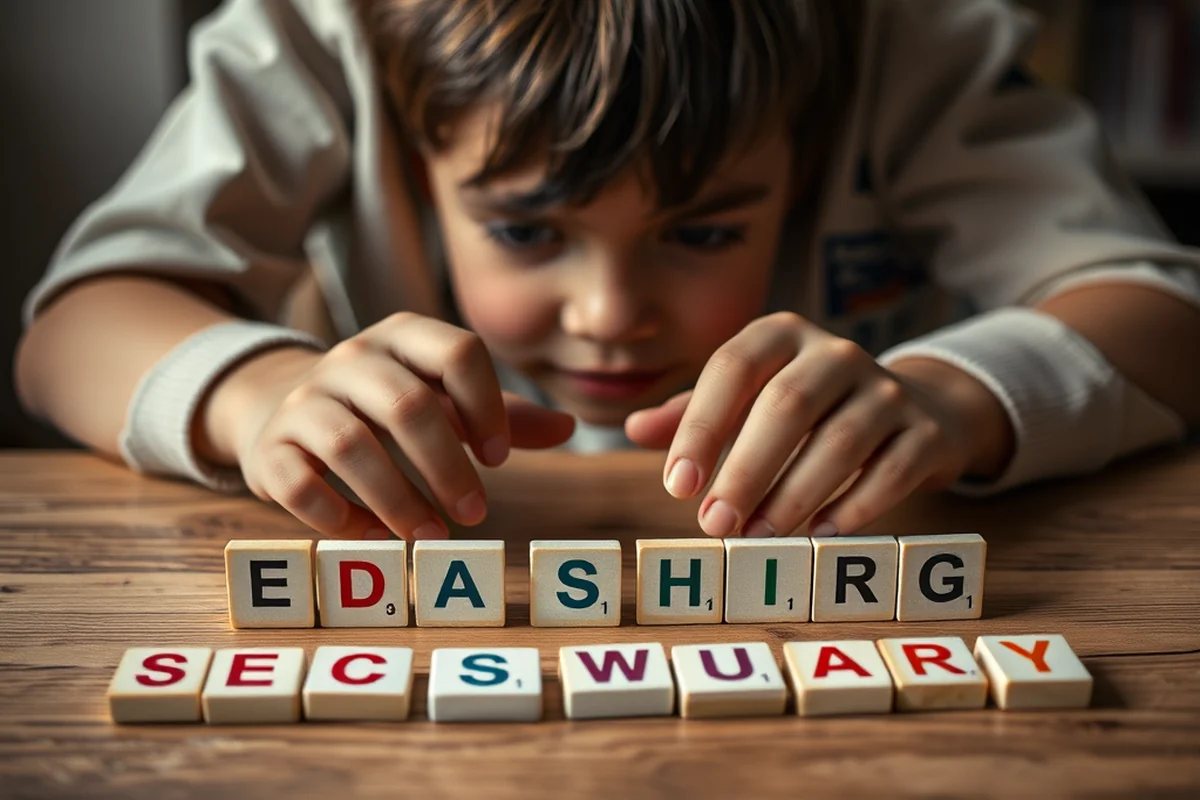
I once introduced a game called 'Word Bingo' where students had to find and mark words on their cards based on definitions I gave them. The class was buzzing with excitement as they matched words like 'jubilant' and 'melancholy.' The next day, several students used these words in their writing. Games like this not only make vocabulary more memorable, but they also give kids a chance to practice in a low-pressure setting.
Another favorite is 'Vocabulary Charades,' where students act out words and their classmates guess them. One day, when we were learning about emotions, a student acted out 'anxious' by pacing around the room with a worried look on his face. That led to a great discussion about what it means to feel anxious and how to cope with it. This activity helped kids not only learn the words but also understand their meanings.
I’ve also used 'Word Pictionary,' where students draw the word and others guess it. This is especially helpful for visual learners. One of my students, who struggled with reading, was able to draw 'resilient' as a character bouncing back from a fall. That moment was powerful because it showed how vocabulary can be represented in ways that make sense to every child.
Games turn learning into a joyful experience.
Related: English in vocabulary use
Visual Aids and Hands-On Learning
I’ve found that using visual aids like flashcards, posters, and images can make vocabulary more accessible. When teaching the word 'vibrant,' I used a poster of a colorful garden and asked the students to describe what they saw. Many of them used the word 'vibrant' in their descriptions, showing that they understood its meaning.
Hands-on activities are also powerful. One of my favorite lessons involved using playdough to create words. For example, we made a 'magnificent' castle using different shapes and textures. This helped students connect the word to the physical act of building, making it more meaningful and memorable.
Another technique I’ve used is creating vocabulary journals where students draw and write about the words they’re learning. This not only reinforces the words but also gives them a creative outlet. One student, who was shy about speaking, started using his journal to practice writing new words, and soon he was participating more in class discussions.
Use a mix of images, drawings, and hands-on activities to reinforce vocabulary learning.
“I still remember the first time I saw my third-grade student, Mia, use the word 'resilient' in a class discussion.”— Teaching Vocabulary to Kids editors
Related: English vocabulary words
Storytelling as a Vocabulary Tool

I’ve found that storytelling is one of the most effective ways to teach vocabulary. When I read a story that included the word 'perseverance,' I paused to ask the students what it meant and how the character in the story showed perseverance. The next day, during a writing lesson, several students used the word in their own stories.
I often use picture books with rich vocabulary and have students identify and discuss the words they see. One of my favorites is 'The Tale of Peter Rabbit,' which has a wide range of descriptive words. We talk about the words, create our own sentences with them, and even act out parts of the story. This helps students see how vocabulary is used in real stories.
Another technique is to let students create their own stories using a set of vocabulary words. I’ve used this with groups of students who were learning words like 'brave,' 'courageous,' and 'determined.' The stories they created were not only creative but also showed a deep understanding of the words they were using.
Related: The noun project
Repetition and Reinforcement
I’ve noticed that when students hear and see new words multiple times, they’re more likely to remember them. I use a technique called 'word of the day,' where I choose a new word and use it throughout the day in different contexts. By the end of the week, several students are using the word in their own speech.
Repetition can also be done through songs and chants. I’ve used simple rhymes to teach words like 'sustain,' 'reflect,' and 'contribute.' The students love singing the rhymes, and they often use the words in their conversations. One of my students, who had trouble with speaking, started using the word 'contribute' when talking about helping others.
I also encourage students to use new words in their writing and conversations. This helps reinforce the words and gives them a chance to practice in real-life situations. One of my students, who used to avoid writing, started using new vocabulary words in his journal and was soon using them in class discussions.
Related: Teaching vocabulary activities for adults
Creating a Vocabulary-Rich Environment
I’ve found that creating a classroom environment rich in vocabulary is one of the most effective ways to help students learn. I use word walls, vocabulary charts, and labeled objects to reinforce learning. For example, I labeled the classroom with words like 'quiet,' 'listen,' and 'respect,' and the students began using these words in their own speech.
I also encourage students to create their own vocabulary displays in the classroom. This gives them a sense of ownership over their learning and helps them see the value of vocabulary. One of my students, who was reluctant to speak, started contributing words to the display and was soon using them in her writing and conversations.
In addition to classroom displays, I encourage students to look for vocabulary in their everyday lives. We talk about the words they see on signs, books, and even in their homes. This helps them see that vocabulary is everywhere, not just in the classroom.
A vocabulary-rich environment makes learning feel natural and effortless.
Related: Teaching vocabulary british council
Assessment and Feedback
I’ve found that assessing vocabulary learning is essential for tracking progress. I use informal assessments like exit tickets, where students write down a new word they learned that day and use it in a sentence. This helps me see which words they understand and which ones they need more practice with.
I also use peer assessments, where students give each other feedback on their vocabulary usage. This helps them learn from one another and reinforces their own understanding. One of my students, who was struggling with new words, began helping his classmates by pointing out words they used incorrectly.
Another technique is to have students use new vocabulary in different formats, such as writing, speaking, and drawing. This helps them practice in multiple ways and gives me a better understanding of their progress. One of my students, who was shy about speaking, started using new words in his drawings, and soon he was using them in his writing and conversations.
🧩 Word Bingo for Younger Kids
A fun and interactive game that helps young children learn and practice vocabulary in a playful way.
📖 Vocabulary Story Time
Using picture books and storytelling to introduce and reinforce vocabulary in a natural, engaging way.
📄 No-Prep Vocabulary Cards
A simple, no-preparation activity that uses flashcards to help students learn and practice vocabulary on the go.
🎭 Group Vocabulary Charades
A fun group activity where students act out vocabulary words and their classmates guess them, promoting teamwork and engagement.
🎨 Vocabulary Art Project
A creative extension activity where students use art to explore and express new vocabulary words in a hands-on way.
| The mistake | Why it happens | The fix |
|---|---|---|
| Overloading students with too many new words at once | This can overwhelm students and make it difficult for them to retain and use the words effectively. | Introduce a few new words at a time and provide ample opportunities for practice and repetition. |
| Not using context when teaching new words | Words without context can be confusing and harder for students to remember. | Use words in real-life situations, stories, and conversations to help students understand their meanings. |
| Not providing enough repetition | Without repetition, students are less likely to retain new vocabulary and use it in their own speech. | Reinforce new words through games, songs, and daily conversations to help students remember them. |
| Ignoring student interest and engagement | If students are not interested or engaged, they are less likely to learn and use new vocabulary. | Use interactive and fun activities to keep students engaged and excited about learning new words. |
Teaching Vocabulary To Elementary Students
Common Questions
How can I help my child learn new vocabulary at home?
What are some effective vocabulary activities for young children?
How often should I introduce new vocabulary words?
Can vocabulary learning be fun for kids?
References
- Improving Education for Multilingual and English Learner Students (cde.ca.gov)
- Effective Differentiation Of Vocabulary Instruction For Upper ... (digitalcommons.hamline.edu)
- (PDF) Teaching Vocabulary through Total Physical Response to Elementary Students (academia.edu)
Cite this guide
Teaching Vocabulary to Kids (2026). Teaching Vocabulary To Elementary Students. https://wordplayroom.com/teaching-vocabulary-to-elementary-students/
Feel free to cite or share this guide.
Vocabulary Game Generator
Generates vocabulary activities by age.
Open it free →