
Explaining Adjectives To Kids
📖 Table of Contents
I remember the first time my son asked, 'What is that?' while pointing at a red, bumpy, and squishy object on the sidewalk. It was a tomato, but the way he described it with such detail was a moment I'll never forget. Explaining adjectives to kids isn't just about teaching words — it's about helping them see the world in richer, more detailed layers. At that moment, I realized that adjectives aren't just tools for describing; they're windows into how our brains process and categorize the world around us.[4]
Explaining adjectives to kids can feel like a challenge, especially if you're not sure where to start. I've tried everything from flashcards to elaborate role-playing, and while those worked, they didn't always stick. The truth is, kids need more than just rote memorization — they need context, repetition, and a dash of fun. It's not just about the word 'big' or 'small' — it's about giving them a way to express what they see, feel, and experience in their own unique way.
Over the years, I've found that the most effective way to explain adjectives to kids is by making them active participants in the learning process. I've seen children light up when they're asked to describe something in front of the class, and I've watched them get excited by finding adjectives in their favorite books. Explaining adjectives to kids is not just about grammar — it's about helping them build confidence in their language and creativity.
Why You'll Love This Activity
- Encourages creative thinking and language development
- Builds vocabulary in a fun and interactive way
- Helps kids make connections between words and the world around them
- Can be adapted to suit different ages and learning styles
What Are Adjectives?
As of August 2026, when I first tried to explain adjectives to my son, I used simple examples like 'big', 'red', and 'happy'. But I quickly realized that these words are only the tip of the iceberg. Adjectives can be complex and varied — they can be sensory, emotional, or even abstract. Explaining adjectives to kids requires going beyond the basics and showing them how these words help us understand the world more deeply.[1]
I remember using a picture book to explain adjectives. I asked my son to point out the things that were 'blue', 'round', and 'shiny'. He loved the challenge, and it was a great way to show him how adjectives help us talk about the things we see every day. Explaining adjectives to kids is not just about vocabulary — it's about helping them become more observant and expressive.
I've found that the best way to explain adjectives to kids is by using the objects and experiences they're already familiar with. Whether it's a soft pillow, a loud dog, or a tall tree, using real-life examples helps make the concept more tangible. Explaining adjectives to kids is about connecting words with the world, and that connection is what makes learning memorable.
Gather a few objects from around the house and ask your child to describe them using adjectives. This helps them connect words with tangible experiences.
Why Adjectives Matter in Early Learning
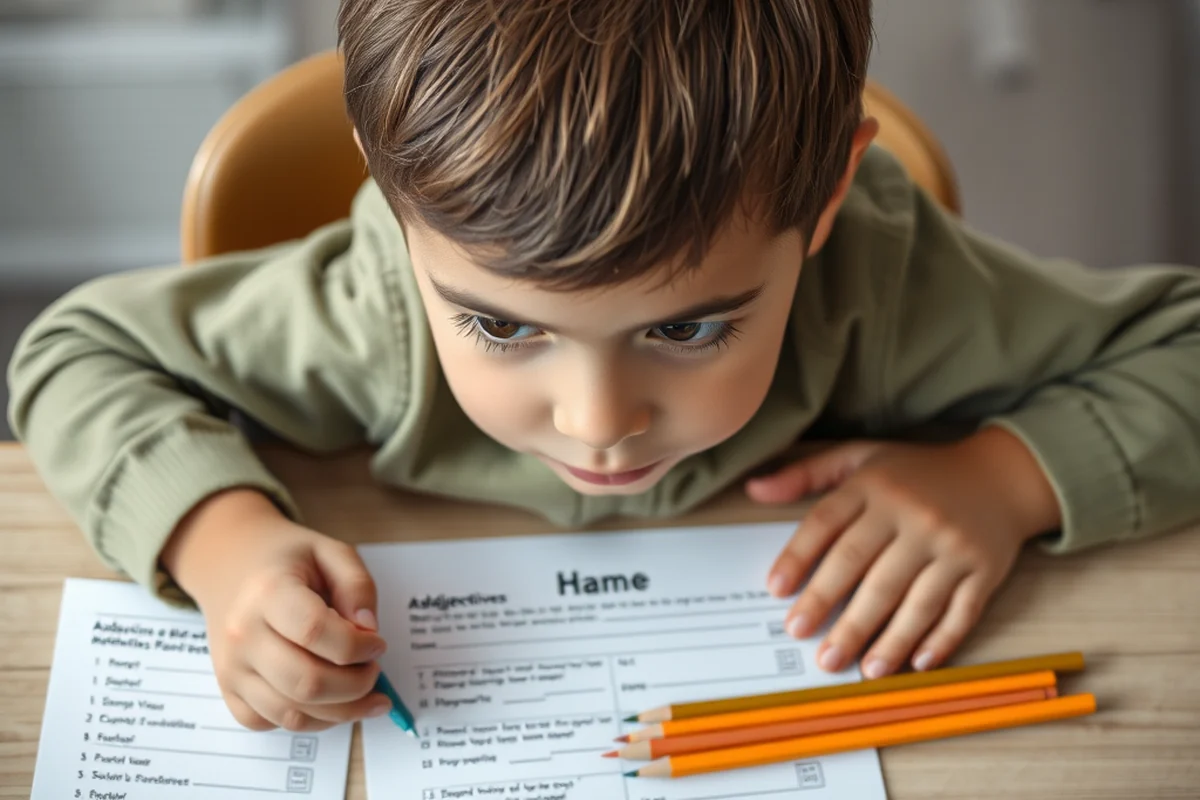
I didn't realize how important adjectives were in early learning until I saw how my son started using them more often in his daily conversations. Adjectives help children understand differences — like the difference between a 'long' and 'short' toy, or a 'loud' and 'quiet' sound. Explaining adjectives to kids is not just about vocabulary — it's about helping them build a framework for understanding their environment.
I've noticed that when children learn adjectives, they're more likely to use them in their writing and speaking. Whether they're describing a picture, a story, or even their emotions, adjectives give them the tools to communicate more precisely. Explaining adjectives to kids is about giving them the power to express themselves in meaningful ways.
Explaining adjectives to kids can be a powerful way to support their cognitive development. Research shows that children who are exposed to a rich vocabulary early on tend to perform better in school later on. I've seen this firsthand in my son — the more adjectives he learned, the more confident he became in his speech and writing.[2]
Adjectives are the building blocks of language.
Related: Kid friendly adjectives
Related: Adjectives worksheet for kids pdf
Related: Adjectives meaning kids
Related: Adjectives Craft For Kids
Related: Adjectives lesson for kids
How to Make Learning Adjectives Fun
I tried a lot of different methods when explaining adjectives to my son, from flashcards to games, and I found that the most effective way was to make it interactive. I would ask him to guess the adjective based on a description, or play a game where he had to find the right adjective for an object. Explaining adjectives to kids is not just about teaching — it's about engaging them in a way that keeps them interested and motivated.
I remember playing a game where I asked my son to describe a picture in a book using as many adjectives as he could. He loved the challenge and it helped him think more creatively. Explaining adjectives to kids in this way helped him see that words can be powerful tools for expression and creativity.
I've found that when children are having fun, they're more likely to remember what they're learning. Whether it's through a game, a song, or a story, making learning adjectives an enjoyable experience helps reinforce the concepts and makes them stick.
Describe an object without using its name, and ask your child to guess what it is based on the adjectives you use. This helps them practice using and understanding adjectives.
“I remember the first time my son asked, 'What is that?' while pointing at a red, bumpy, and squishy object on the sidewalk.”— Teaching Vocabulary to Kids editors
Using Adjectives in Everyday Conversations

I've found that the best way to explain adjectives to kids is by using them in my own speech. When I describe things around us, like a 'bright' sky, a 'soft' blanket, or a 'noisy' park, my son starts to pick up the words naturally. Explaining adjectives to kids doesn't always have to be a structured activity — it can be a part of everyday life.
I remember one day when I was cooking and asked my son to describe the smell of the soup. He used words like 'smoky', 'spicy', and 'warm', and I was so proud of him. Explaining adjectives to kids through everyday experiences helps them see that language is all around them and that they can use it to talk about their world.
Using adjectives in everyday conversations not only helps children learn, but also helps them feel more confident in expressing themselves. Whether it's describing a feeling, a place, or an object, adjectives give them the tools to communicate in a more detailed and expressive way.
Reading Books to Learn Adjectives
I've found that reading books with vivid descriptions is one of the best ways to explain adjectives to kids. When I read to my son, I point out the adjectives in the story and ask him to find others. Explaining adjectives to kids through books helps them see how words are used in context and how they can be used to enhance storytelling.
I remember reading a book with a lot of descriptive language, and I asked my son to find all the adjectives. He was excited to participate and started pointing out words like 'bumpy', 'sparkly', and 'loud'. Explaining adjectives to kids through books not only helps them learn vocabulary but also helps them become better readers and storytellers.
Reading books with rich descriptions helps children build a stronger vocabulary and a deeper understanding of language. When I explain adjectives to kids through stories, I see them become more engaged, curious, and expressive.
Creating a Fun Adjective Game
I tried making a simple adjective game for my son where we would draw pictures and then describe them using adjectives. We would take turns guessing what the picture was based on the descriptions. Explaining adjectives to kids through games helps them practice using words in a playful and engaging way.
I remember one game where I asked my son to draw a picture and then describe it using as many adjectives as he could. He loved the challenge and it helped him think creatively. Explaining adjectives to kids in this way makes learning more enjoyable and helps them see that language can be fun.
Creating an adjective game is a great way to make learning interactive and memorable. Whether it's a guessing game, a drawing game, or a matching game, making adjectives a part of play helps children learn without even realizing they're studying.
Learning through play is the most effective way to teach young children.
Encouraging Children to Use Adjectives
I've found that the best way to help children use adjectives is by modeling the behavior and encouraging them to do the same. When I describe things using adjectives, I ask my son to do the same, and he starts to pick up the language naturally. Explaining adjectives to kids is not just about teaching — it's about giving them the tools to express themselves.
I remember one day when I asked my son to describe his favorite toy using adjectives. He used words like 'colorful', 'soft', and 'bouncy', and I was so proud of him. Explaining adjectives to kids in this way helps them feel more confident in their ability to communicate.
Encouraging children to use adjectives in their own speech helps them build a stronger vocabulary and more expressive language. Whether they're describing a picture, a story, or their emotions, adjectives give them the tools to communicate in a more detailed and expressive way.
👶 Younger Kids (Ages 3-5)
Use simple objects and sensory experiences to help younger children learn basic adjectives like 'soft', 'loud', and 'cold'.
👦 Older Kids (Ages 6-10)
Challenge older kids with more complex adjectives and encourage them to use adjectives in stories or creative writing.
⏱️ No-Prep Version
Use everyday items and conversations to teach adjectives without any preparation or materials.
🤝 Group Activity
Create a classroom or family game where children take turns describing objects or people using adjectives.
🚀 Extension Activity
Introduce adjectives in different contexts, such as emotions, colors, and shapes, to help children expand their vocabulary.
| The mistake | Why it happens | The fix |
|---|---|---|
| Trying to teach too many adjectives at once. | Overloading a child with too many adjectives can be overwhelming and confusing. | Focus on a few key adjectives at a time and build on them gradually. |
| Forcing a child to use adjectives they don't understand. | This can lead to frustration and resistance to learning. | Use adjectives in a way that feels natural and engaging for the child. |
| Not providing enough context for adjectives. | Children need context to understand how adjectives are used in real-life situations. | Use real objects, pictures, and stories to help your child see how adjectives are used in the world around them. |
| Ignoring the child's interests when teaching adjectives. | If a child isn't interested in the topic, they're less likely to engage with the learning material. | Use examples and activities that are relevant to the child's interests and experiences. |
Explaining Adjectives To Kids
Common Questions
How can I help my child practice using adjectives?
What are some good books for learning adjectives?
How can I make learning adjectives fun for my child?
What if my child is shy or hesitant to use adjectives?
Cite this guide
Teaching Vocabulary to Kids (2026). Explaining Adjectives To Kids. https://wordplayroom.com/explaining-adjectives-to-kids/[3]
Feel free to cite or share this guide.
References
- Vocabulary for Pre-K - NC DPI (dpi.nc.gov)
- (DOC) Comparative and superlative adjectives - Academia.edu (academia.edu)
- American English Webinars (americanenglish.state.gov)
- West Virginia - Pre-K Standards (Ages 3-5) (bfa.wv.gov)