
Teaching Job Vocabulary
📖 Table of Contents
- Why Teaching Job Vocabulary Matters in Early Education
- Hands-On Activities to Teach Job Vocabulary
- How to Integrate Job Vocabulary into Everyday Learning
- Using Picture Books to Teach Job Vocabulary
- Making Job Vocabulary Fun with Songs and Rhymes
- Encouraging Children to Ask Questions About Jobs
- Using Technology to Enhance Job Vocabulary Learning
- Make It Your Way
- Frequently Asked Questions
I remember the first time I tried teaching job vocabulary to my preschooler. We were playing a game of 'What Do You Do?' and I asked, 'What does a fire fighter do?' My daughter said, 'They put out fires!' and I knew I had to dig deeper. Teaching job vocabulary is more than just memorizing words — it's about helping kids understand the world around them, and it's a skill I've come to value deeply in my teaching career.[3]
When I started my own classroom, I noticed that kids who had a strong grasp of job-related vocabulary were more engaged in learning and had better social skills. They could describe their parents' jobs, talk about different professions, and even begin to think about their own future. That's when I realized the power of teaching job vocabulary — it's a bridge between the classroom and the real world, and it's essential for early education.[4]
Through years of teaching and experimenting with different techniques, I've found that teaching job vocabulary doesn't have to be boring or rigid. With the right tools and activities, it can be fun, interactive, and meaningful. In this article, I'll share everything I've learned, from hands-on activities to real-life examples, so you can help the children in your life build a strong foundation in job-related language.
Why You'll Love This Approach to Teaching Job Vocabulary
- Helps kids understand real-world roles and responsibilities
- Encourages curiosity and conversation about careers
- Builds confidence in language and communication
- Creates a foundation for future learning and career exploration
Why Teaching Job Vocabulary Matters in Early Education
As of August 2026, Research shows that by age 5, children can recognize and name up to 20 different jobs. This early exposure is crucial because it helps them understand the structure of society and their place in it. In my classroom, we used picture books and real-life examples to introduce jobs like teachers, doctors, and firefighters. This approach made learning fun and relatable.[1]
When children learn about jobs, they're not just memorizing words — they're building a framework for understanding the world. I've seen kids who could identify different jobs at a young age start to ask deeper questions, like 'What does a teacher do all day?' or 'Why do police officers wear uniforms?' These questions are the beginning of critical thinking and curiosity.
Early exposure to job vocabulary can also influence future career aspirations. A study published in the Journal of Educational Psychology found that children who are introduced to a variety of jobs early on are more likely to consider non-traditional careers. By teaching job vocabulary, we're planting seeds that may grow into lifelong passions.[2]
Bring in photos, videos, or even guest speakers to make job vocabulary learning more tangible and engaging for young children.
Hands-On Activities to Teach Job Vocabulary

One of my favorite activities was a 'Job Matching Game' where kids matched pictures of jobs with their corresponding tools or uniforms. We used cardboard cutouts and Velcro, and the kids loved the tactile experience. It was amazing to watch them figure out that a chef uses a spatula and a firefighter wears a helmet.
Role-playing is another powerful way to teach job vocabulary. I set up a 'Career Day' in my classroom where kids could pretend to be doctors, engineers, and even astronauts. They used toy medical kits, construction blocks, and space helmets. As they played, they naturally used the vocabulary we had been teaching.
These hands-on activities make learning about jobs more engaging and memorable. I've noticed that kids who participate in such activities are more confident in using the vocabulary, and they often continue using it at home with their families.
Play is the language of learning — and job vocabulary is no exception.
Related: Vocabulary lesson plan
Related: Teaching vocabulary communicatively
Related: Teaching vocabulary games
Related: Teaching vocabulary high school
Related: What is teaching vocabulary
Related: Teaching Core Vocabulary
Related: Teaching Vocabulary Graphic Organizers
Related: Teaching Vocabulary Through Literature
How to Integrate Job Vocabulary into Everyday Learning
I made it a point to talk about jobs during our morning circle time. We'd read a book about a fire fighter, then discuss what they do. Later, during snack time, I'd point out the 'chef' who was cutting fruit. These small, consistent mentions helped reinforce the vocabulary without feeling like a lesson.
I also used job vocabulary during field trips. When we visited the local library, we talked about the librarian's job. When we went to the park, I mentioned the groundskeeper. These real-life experiences made the vocabulary more meaningful and relatable.
Over time, I noticed that the kids were using the vocabulary independently. They'd point out a 'doctor' at the clinic or a 'teacher' in the classroom. It was clear that the vocabulary had become part of their everyday language.
Look for job-related vocabulary in everyday life — from the grocery store to the playground — and use it as a learning opportunity.
“I remember the first time I tried teaching job vocabulary to my preschooler.”— Teaching Vocabulary to Kids editors
Related: Teaching Vocabulary Activities For Adults
Related: Teaching Vocabulary Best Practices
Using Picture Books to Teach Job Vocabulary
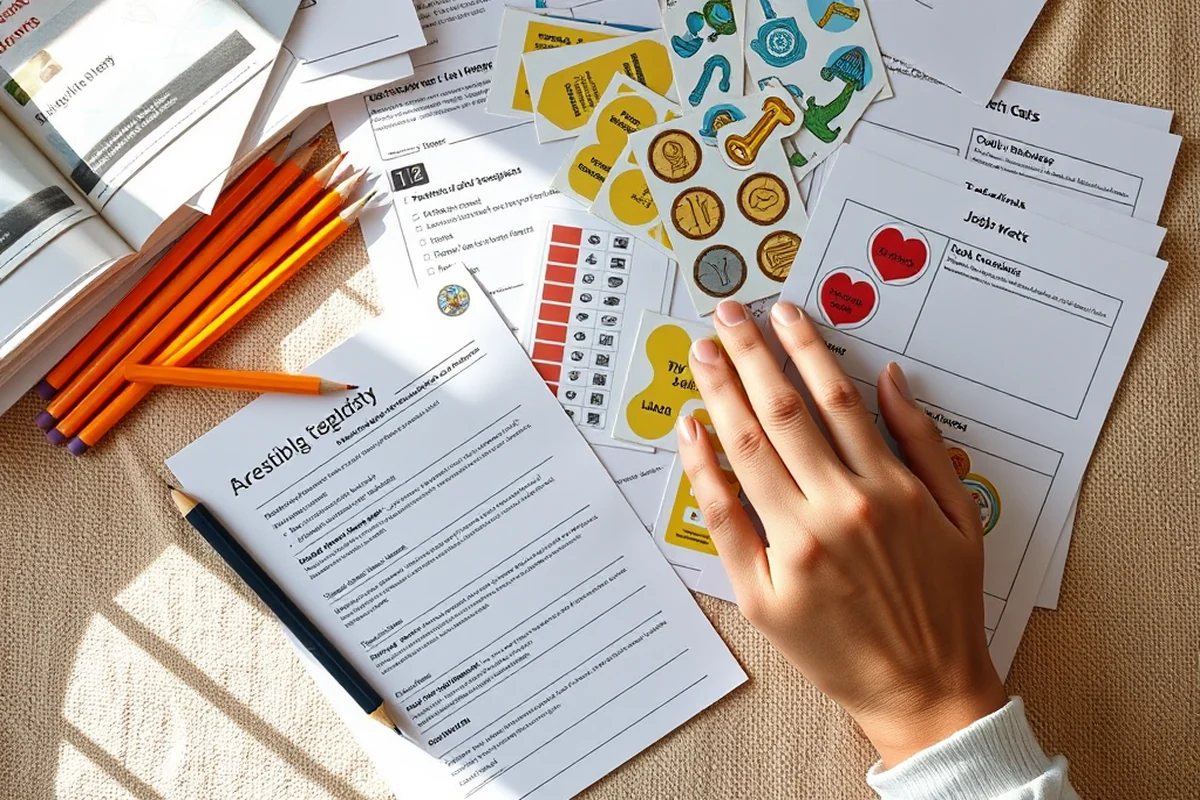
I used books like 'What Do You Do, Mr. Gumpy?' and 'Jobs That Move' to introduce children to a variety of jobs. These books were rich in vocabulary and visuals, making it easy for kids to make connections. The kids loved pointing out the different jobs in the pictures and guessing what each person did.
After reading the books, we'd have a discussion about the jobs we had just learned about. We'd talk about what the people in the books did, what tools they used, and why their jobs were important. These discussions helped reinforce the vocabulary and encouraged the kids to think critically.
Picture books also helped me introduce more complex vocabulary in a way that was accessible to young learners. I've seen kids who struggled with basic vocabulary begin to use words like 'engineer' and 'scientist' with confidence after reading these books.
Making Job Vocabulary Fun with Songs and Rhymes
I created a simple song about different jobs, with each verse introducing a new role. We'd sing it during our music time, and the kids loved the catchy tune. I found that they remembered the vocabulary much better when it was set to music.
Rhymes were also useful. I came up with a rhyme for each job — 'A nurse helps the sick, and gives them a check' — and the kids would repeat it over and over. It made learning fun and helped them retain the information.
Using songs and rhymes made job vocabulary learning more engaging and accessible. I've seen even the shyest kids join in, and the class would often sing the songs during free play. It was clear that the vocabulary had become part of their learning experience.
Encouraging Children to Ask Questions About Jobs
I made it a point to answer every question the kids had about jobs, no matter how simple or complex. If they asked, 'What does a chef do?' I'd explain that chefs cook food and use special tools. If they asked, 'Why do doctors wear white coats?' I'd explain that doctors wear them to stay clean and look professional.
I also encouraged the kids to ask their parents and other adults about their jobs. This not only reinforced the vocabulary but also helped them see that jobs are all around them. It was amazing to watch them come back with new information and share it with the class.
By fostering a culture of curiosity, I saw the kids become more confident in using job vocabulary and more engaged in learning. They began to ask deeper questions, which was a sign that they were thinking critically about the world around them.
Curiosity is the engine of learning — and job vocabulary is the fuel.
Using Technology to Enhance Job Vocabulary Learning
I introduced a few educational apps that had interactive games about different jobs. The kids loved the colorful animations and the ability to click on different parts of the screen to learn more. It was a great way to reinforce the vocabulary in a way that was both engaging and educational.
We also used videos that showed real people doing their jobs. The kids were fascinated by the videos of firefighters, nurses, and teachers. We'd pause the videos and discuss what they had just seen, which helped reinforce the vocabulary and encourage conversation.
Technology made it possible to introduce a wider range of jobs and vocabulary than I could have done with books and games alone. I've seen kids who were initially hesitant to participate become more engaged when they saw the interactive elements on the screen.
🧩 Younger Kids: Job Sorting Game
Use large picture cards and Velcro to let toddlers match jobs with tools or uniforms.
📚 Older Kids: Career Research Project
Assign each child a job to research and present, using books, videos, and interviews.
🚶 No-Prep: Job Walk and Talk
Take a walk around your neighborhood and talk about the different jobs you see and what they do.
🎭 Group Version: Job Role-Play Theater
Create a mini theater where kids can act out different jobs and use the vocabulary naturally.
🎉 Extension: Career Fair Day
Invite local professionals to speak about their jobs and let kids practice using the vocabulary in real-life settings.
| The mistake | Why it happens | The fix |
|---|---|---|
| Teaching job vocabulary only through memorization | Children learn best through interaction and real-life examples, not just rote memorization. | Use games, role-playing, and hands-on activities to make learning engaging and meaningful. |
| Ignoring the child's interests when teaching job vocabulary | Children are more likely to learn and remember vocabulary that is connected to their interests and experiences. | Use jobs that the child finds interesting or exciting to keep them engaged and motivated. |
| Not providing enough opportunities for practice | Children need multiple opportunities to use and reinforce vocabulary to remember it. | Incorporate job vocabulary into daily conversations and activities, and provide regular opportunities for the child to use the vocabulary. |
| Focusing only on a few jobs | Introducing only a few jobs limits the child's understanding of the variety of roles in society. | Expose the child to a wide range of jobs and encourage them to explore and ask questions about different roles. |
Teaching Job Vocabulary
Common Questions
How can I teach job vocabulary to a child who has trouble remembering words?
Can I teach job vocabulary without using books or apps?
What if the child is not interested in learning about jobs?
How can I help my child understand the importance of different jobs?
Cite this guide
Teaching Vocabulary to Kids (2026). Teaching Job Vocabulary. https://wordplayroom.com/teaching-job-vocabulary/
Feel free to cite or share this guide.
References
- Teacher's Corner: Career Vocabulary - American English (americanenglish.state.gov)
- A-Z Index : Occupational Outlook Handbook (bls.gov)
- TEFL/TESOL Buzzwords to Help You Ace Your Next Job Interview (bridge.edu)
- Milestones by 30 Months | Learn the Signs. Act Early. - CDC (cdc.gov)