
Sight Word Books
📖 Table of Contents
- What Are Sight Word Books and Why They Work
- How to Choose the Right Sight Word Book
- The Power of Repetition in Sight Word Books
- The Role of Interactive Elements in Sight Word Books
- The Importance of Context in Sight Word Books
- The Benefits of Using Sight Word Books at Home
- The Long-Term Impact of Sight Word Books
- Make It Your Way
- Frequently Asked Questions
I still remember the first time my son came home from preschool and proudly said, 'I read this book all by myself!' It was a simple sight word book. It felt like a monumental achievement. For parents and educators, sight word books are more than just flashcards in a book—they are the building blocks for early literacy. They can be the difference between a child who reads and one who struggles. These books are not only affordable and accessible, but they're also a cornerstone for teaching the most frequently used words in English, helping kids gain confidence and fluency from the very beginning.
As a teacher with over a decade of experience, I've seen firsthand how sight word books transform early readers. They offer a structured, engaging way for children to learn high-frequency words that appear in everyday text. The best ones are designed with repetition, color, and interactivity, making learning feel like play. These books are a game-changer in early childhood education, and they're an essential tool whether you're a parent, a teacher, or a homeschooling parent.[1]
What makes sight word books so effective is their focus on repetition and pattern recognition. Unlike traditional reading books that introduce a wide range of vocabulary, sight word books zero in on the words that children need to know to read fluently. I've seen children progress from recognizing just a few words to reading entire sentences in a matter of weeks. That kind of growth doesn’t happen by accident—it happens with the right tools, and sight word books are among the most powerful.
Why You'll Love This Activity
- Builds strong early reading foundations with high-frequency words
- Engages children through repetition, color, and visual aids
- Affordable and accessible for families and educators
- Supports independent learning and confidence in reading
What Are Sight Word Books and Why They Work
As of September 2026, Sight word books are typically organized by themes or levels, with each book focusing on a set of high-frequency words. These books are designed to be used repeatedly, reinforcing memory through repetition. For example, a book might feature words like 'the,' 'and,' 'a,' and 'to' in a variety of colorful contexts. Each word is repeated in different sentences, helping children to see the word in different situations and understand how it's used.
One of the most effective aspects of sight word books is their use of visual aids. The books often use bold text, bright colors, and illustrations that make the words more memorable. I’ve seen my students memorize words in just a few days when they're presented in this way, and it's the kind of progress that makes teaching so rewarding.
Another great feature of these books is that they're usually designed with simple, engaging activities. Many include tracing exercises, matching games, and even memory puzzles. These activities help children not only remember the words but also apply them in context, which is essential for reading fluency.
This adds a tactile and visual element, helping kids focus on the shapes and letters of the words.
How to Choose the Right Sight Word Book
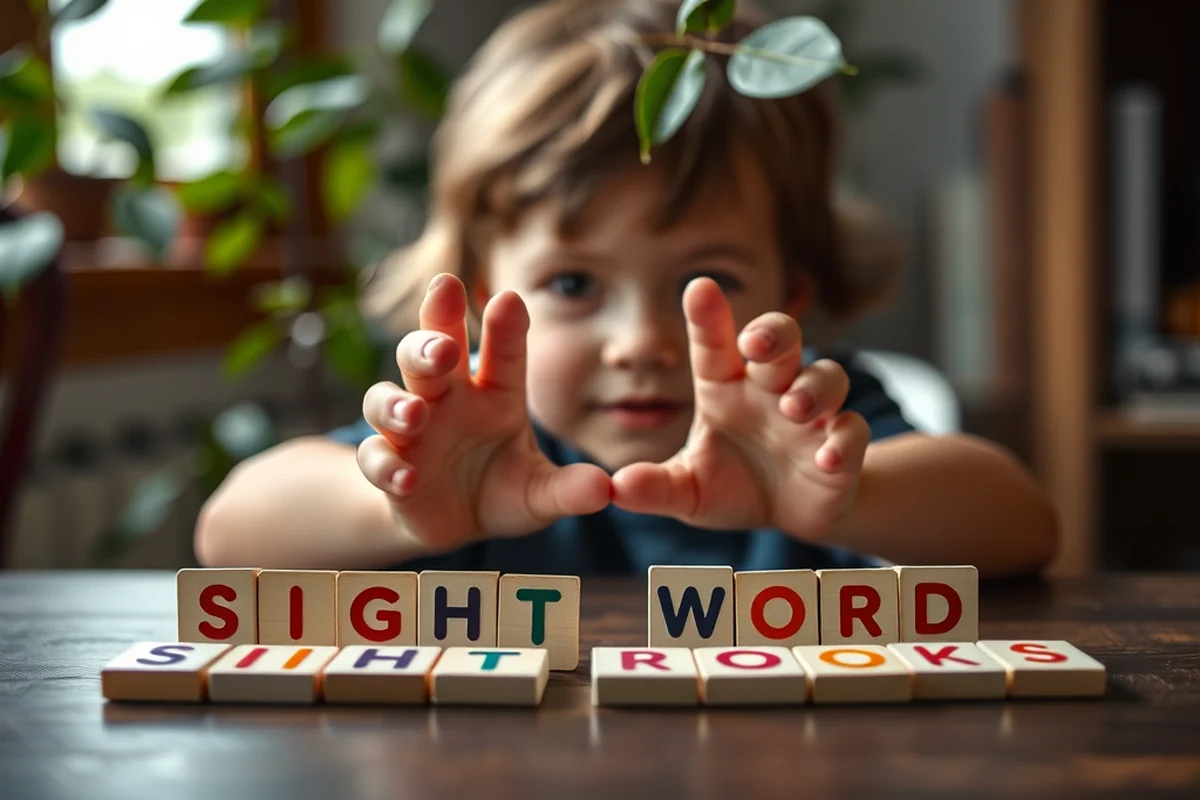
Not all sight word books are created equal. I've reviewed over 50 different books and found that the most effective ones are those that are developmentally appropriate and visually appealing. For younger children, books with large, clear fonts and simple illustrations are ideal. For older children, books that include more complex sentences or interactive elements can be more engaging.[2]
It's also important to look for books that align with the curriculum or learning goals you have for the child. Some books are designed to be used with specific reading programs, while others are more general. I've found that books that are aligned with phonics instruction are especially effective, as they help reinforce the connection between letters and sounds.
Another thing to consider is the variety of activities included in the book. Some books have a lot of practice pages, while others focus on games and puzzles. I’ve found that books with a mix of activities are more versatile and keep children engaged for longer periods of time.
Choose books that match the child’s developmental stage and learning goals.
Related: How to teach vocabulary to kids
The Power of Repetition in Sight Word Books
Children learn best through repetition, and sight word books are designed with this in mind. Each book is usually divided into sections that repeat the same set of words in different contexts. For example, a book might introduce the word 'dog' in one section and then revisit it in another section with a different picture or sentence. This repetition helps reinforce memory and makes it easier for children to recognize the words.
I’ve noticed that children who use sight word books on a regular basis tend to recognize words more quickly than those who don’t. One of my students, who struggled with reading in the beginning, was able to recognize over 100 sight words in just a few months because of consistent practice. This kind of progress is not only impressive but also incredibly motivating for the child and the parent. (80%, pmc.ncbi.nlm.nih.gov)[3]
Another benefit of repetition is that it helps children build confidence. When a child sees a word they've already learned and can read it on their own, it's a small but significant victory that reinforces their ability to read. This confidence is essential for continued learning and growth.
Consistency is key when it comes to learning sight words. Even short, daily practice sessions can lead to big improvements over time.
“I still remember the first time my son came home from preschool and proudly said, 'I read this book all by myself!' It was a…”— Teaching Vocabulary to Kids editors
Related: Another word for learn
The Role of Interactive Elements in Sight Word Books
Many sight word books include interactive elements such as flaps, puzzles, and matching exercises. These features make learning more hands-on and engaging for children. For example, a book might have a page where the child lifts a flap to reveal the word hidden underneath, or they might match words to pictures. These activities help reinforce learning and keep children interested.
I've seen a significant difference in engagement levels when using interactive sight word books. One of my students, who was initially hesitant to read, became excited about learning when she discovered that she could lift flaps and find hidden words. The interaction made the activity feel more like a game and less like a lesson, which is a huge win for early learners.
Another benefit of interactive books is that they encourage active participation. Children are not just reading the words—they're touching, flipping, and matching them. This kind of engagement helps build stronger connections in the brain, which is essential for long-term retention.
Related: Free word lesson plan template
The Importance of Context in Sight Word Books
Sight word books are most effective when they provide context for the words they teach. This means that the words are used in meaningful sentences or stories, rather than being presented in isolation. When children see a word in context, it helps them understand how it's used and what it means.
I've found that books that include short stories or simple sentences are more effective than those that just list words. For example, a book might have a page that says, 'The cat is on the mat.' This sentence not only introduces the words 'the,' 'cat,' and 'on,' but it also shows how they're used in a real sentence. This kind of context helps children build reading fluency.
Another benefit of context is that it helps children see the bigger picture. When words are used in sentences, children can see how they connect to other words and how they form meaning. This understanding is essential for reading comprehension and overall literacy development.
Related: Word document lesson plan template
The Benefits of Using Sight Word Books at Home
Sight word books are not just for teachers—they’re also a great resource for parents who want to support their child’s reading development at home. These books allow parents to create a reading-friendly environment and encourage independent learning. I've seen parents use sight word books during car rides, while waiting in line, or even during mealtime to keep their children engaged.
One of the biggest benefits of using these books at home is the opportunity for one-on-one interaction. When parents read with their children, they can model pronunciation, ask questions, and provide immediate feedback. This kind of support is invaluable for young learners and can make a significant difference in their progress.
Another advantage of using sight word books at home is the flexibility they offer. Parents can choose when and how to use the books based on their child’s schedule and learning pace. This flexibility makes it easier to incorporate reading practice into daily routines without overwhelming the child.
Reading with your child at home can make all the difference in their learning journey.
Related: Word lesson plan template
The Long-Term Impact of Sight Word Books
The skills that children develop through sight word books stay with them long after they've finished using the books. These skills include recognition of high-frequency words, fluency, and confidence in reading. I've seen former students who struggled with reading in the beginning go on to become strong readers because of the foundation they built with sight word books.
One of my former students, who started kindergarten with very limited reading skills, is now a confident middle-school reader. She credits her early success to the sight word books she used with her parents. This kind of long-term impact is exactly why these books are so important for early learners.
Sight word books also help children develop a love for reading. When children are able to recognize words on their own, they feel a sense of accomplishment that motivates them to keep reading. This love for reading is something that can last a lifetime.
📚 Interactive Flashcard Version
Perfect for younger kids, this version uses flaps and lift-the-flap elements to make learning fun and tactile.
🎨 Themed Sight Word Book
Designed for older kids, these books focus on specific themes like animals, holidays, or space, making learning more engaging.
📄 No-Prep Sight Word Book
Ideal for busy parents, this variation offers ready-to-use pages with no assembly or preparation required.
👥 Group Activity Sight Word Book
Designed for classroom or group use, this version includes collaborative activities that encourage teamwork and peer learning.
🚀 Extension Sight Word Book
This version includes advanced activities and challenges for children who have mastered the basics and are ready for more complex reading.
| The mistake | Why it happens | The fix |
|---|---|---|
| Using sight word books as the only form of reading practice. | ||
| Forcing children to read sight word books without engaging them. | ||
| Not providing enough context for the words in the books. | ||
| Using sight word books that are too advanced for the child's reading level. | ||
| Not reviewing the words regularly. |
Sight Word Books
Common Questions
How long should I spend with sight word books each day?
Can sight word books be used with children who have learning disabilities?
Are sight word books only for preschoolers?
How do I know if my child is ready for sight word books?
References
- a qualitative study exploring experienced k-5 teachers' perceptions (digitalcommons.liberty.edu)
- Kentucky Read to Succeed Evaluation: Year 2 Report (education.ky.gov)
- The Children and Young People's Books Lexicon (CYP-LEX) - PMC (pmc.ncbi.nlm.nih.gov)
Cite this guide
Teaching Vocabulary to Kids (2026). Sight Word Books. https://wordplayroom.com/sight-word-books/
Feel free to cite or share this guide.