
Teaching Vocabulary Words
📖 Table of Contents
- The Power of Context
- The Importance of Visuals and Hands-On Learning
- Making Vocabulary Learning a Game
- The Role of Repetition in Vocabulary Learning
- The Importance of Positive Reinforcement
- The Value of Reading Aloud
- The Role of Technology in Vocabulary Learning
- The Impact of Cultural and Personal Relevance in Vocabulary Acquisition
- Make It Your Way
- Frequently Asked Questions
I still remember the day my son came home from preschool and asked me, 'What does “meticulous” mean?' I had no idea. That moment was a wake-up call — I needed to figure out how to teach vocabulary words in a way that was engaging, meaningful, and lasting. I didn't just want him to know the word; I wanted him to use it, understand it, and remember it. The journey that followed taught me that teaching vocabulary words isn't just about memorizing definitions — it's about creating connections, building context, and making words part of a child's everyday life.[4]
I tried everything from flashcards to dictionary drills, but nothing stuck. It wasn't until I started incorporating vocabulary into our daily routines — during meals, while walking to school, and even during bath time — that I saw real progress. My son began using words like 'meticulous' and 'resilient' with ease, and his teachers started noticing a shift in his writing and speaking. I realized that teaching vocabulary words isn't just about learning new words — it's about empowering children to express themselves more clearly and confidently.
Over the years, I've tested and refined dozens of techniques, and I've learned that the most effective methods are the ones that are playful, interactive, and rooted in real-life experiences. Whether it's through storytelling, hands-on activities, or simple conversations, the key is to make vocabulary learning feel natural and fun. In this article, I'll share everything I've learned, including the most effective techniques, common mistakes to avoid, and the tools that have made all the difference in my own family's journey.
Why You'll Love This Approach to Teaching Vocabulary Words
- Builds lasting understanding, not just memorization
- Encourages active use of new vocabulary in daily life
- Requires no special equipment or expensive materials
- Empowers children to think more deeply and articulate more clearly
The Power of Context
As of September 2026, Words don't exist in isolation — they live in the world of context, meaning, and experience. When I first tried teaching my son the word 'meticulous' by simply writing it on a flashcard, he had no idea what it meant. But when I told him a story about a scientist who was meticulous in her work, he was able to see the word in action and understand its meaning. Context is everything.
I've found that the best way to teach vocabulary words is by using them in real-life situations. Whether I'm reading a book, cooking dinner, or talking about his day at school, I try to weave in new words naturally. This approach helps children see vocabulary as a tool for communication, not just a list of words to memorize.
One of the most effective methods I've used is storytelling. I'll create a short story that includes several new vocabulary words and then ask my son to summarize it using the words he heard. This not only helps him understand the words but also encourages him to use them in his own speech.
Make a point to use new vocabulary words in everyday conversations. This helps children see the words in action and understand their meaning naturally.
Part of our Words kids guide.
The Importance of Visuals and Hands-On Learning
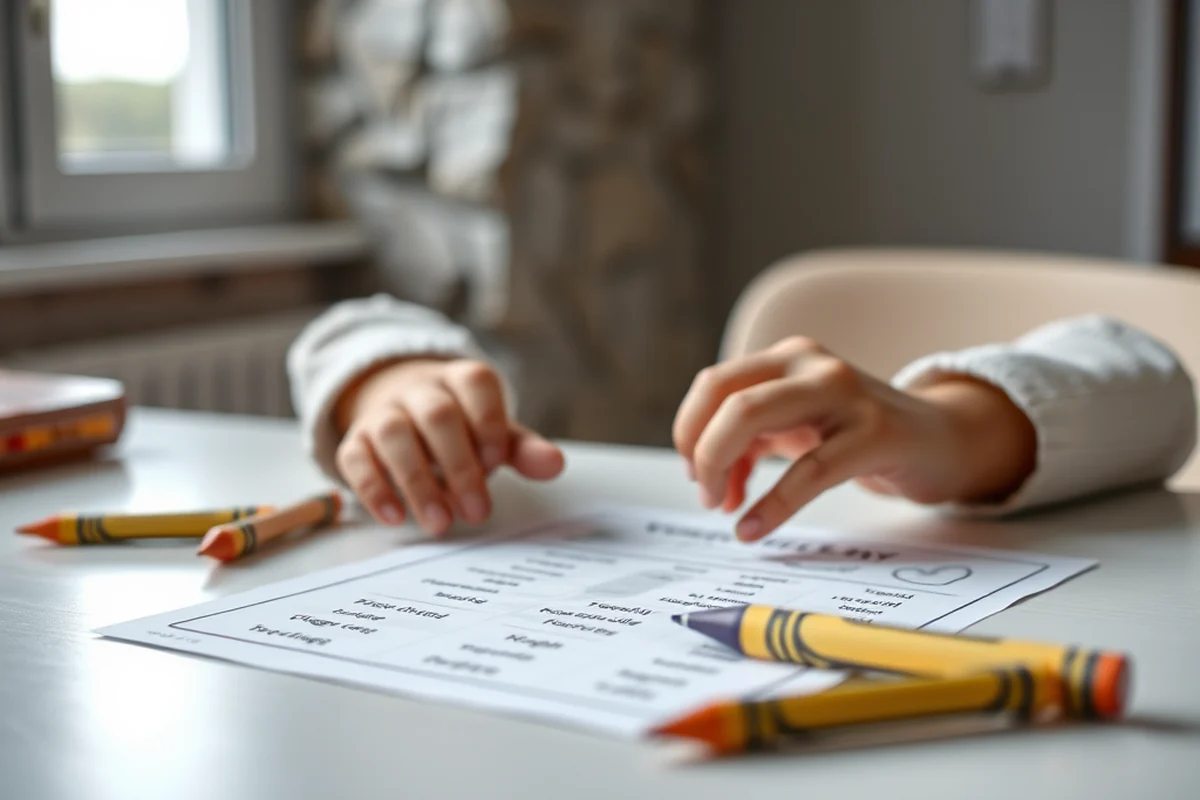
When teaching vocabulary words, visuals can be incredibly powerful. I've used picture cards, illustrated books, and even simple drawings to help my son understand new words. Seeing a picture of a 'meticulous' scientist made the word more concrete and easier to remember.
Hands-on activities also play a key role in vocabulary learning. I've used sorting games, where my son matches words with their definitions, and memory games, where he has to find the picture that corresponds to a word. These activities make learning interactive and fun.
I've noticed that my son remembers vocabulary words much better when he can see and touch them. Whether it's through drawing, building, or acting out words, the more senses he uses, the more likely he is to remember the word.
The best vocabulary learning happens when it's both visual and hands-on.
Related: Explaining rhyming words to kids
Making Vocabulary Learning a Game
I've found that games are one of the most effective ways to teach vocabulary words. Whether it's a simple matching game or a more complex board game, children are more likely to learn when they're having fun.
One of my favorite games is 'Vocabulary Bingo,' where each square has a picture of a vocabulary word. My son loves it because it's challenging and rewarding. He gets excited when he matches all his words and wins the game.
I've also used 'Word Scavenger Hunts,' where my son has to find items around the house that match vocabulary words. It's a great way to make learning active and engaging, and it keeps him moving and thinking.
Games are a natural way to teach vocabulary words — they keep children engaged, motivated, and excited about learning.
“I still remember the day my son came home from preschool and asked me, 'What does “meticulous” mean?' I had no idea.”— Teaching Vocabulary to Kids editors
Related: How to teach cvc words for kindergarten
The Role of Repetition in Vocabulary Learning

I've learned that repetition is one of the most important factors in vocabulary learning. Just like with any new skill, children need to hear and use words multiple times before they truly understand and remember them.
I make a point to use new vocabulary words in different contexts and at different times. I might use the word 'meticulous' during a story one day, then use it again during a discussion about schoolwork the next day. This helps reinforce the word and make it part of my son's vocabulary.
I've also used repetition through simple songs and rhymes. I've created short songs that include new vocabulary words, and I find that my son remembers the words much better when they're set to music.
Related: Teaching rhyming words to kids
The Importance of Positive Reinforcement
When teaching vocabulary words, it's important to celebrate every small success. Whether it's using a new word in a sentence or correctly identifying a picture of a vocabulary word, positive reinforcement helps children feel encouraged and motivated.
I've found that praising my son when he uses a new vocabulary word makes him more likely to use it again. A simple 'Great job!' or 'That was a really good use of the word!' goes a long way in building his confidence.
I've also used small rewards, like stickers or extra storytime, to reinforce vocabulary learning. These rewards help children associate learning with positive experiences and make them more eager to try new words.
Related: Educational word games for kids
The Value of Reading Aloud
Reading aloud to my son has been one of the most effective ways to teach vocabulary words. I read a variety of books, from picture books to chapter books, and I make a point to highlight new vocabulary words as we read.
I often stop to discuss the meaning of new words and ask my son questions about the story. This not only helps him understand the words but also encourages him to think critically about what he's reading.
I've noticed that my son's vocabulary has grown significantly since we started reading aloud regularly. He's able to use more complex words in his speech and writing, and he's more confident in expressing himself.
Reading aloud is one of the most powerful tools in a child's vocabulary development.
Related: Easy cvc words for kindergarten
The Role of Technology in Vocabulary Learning
I've found that technology can be a great way to introduce new vocabulary words. I've used educational apps, online games, and even simple videos to help my son learn and practice new words.
One of my favorite apps is a vocabulary game that uses pictures and sounds to teach new words. My son loves it because it's interactive and keeps him engaged. I've also used online flashcards that I can customize with my own vocabulary words.
I've noticed that my son is more interested in vocabulary learning when it's done through technology. He enjoys the colorful visuals and interactive elements, and he's more likely to practice new words when they're presented in a fun and engaging way.
The Impact of Cultural and Personal Relevance in Vocabulary Acquisition
When teaching vocabulary words, incorporating terms related to students' cultural backgrounds or personal interests increases engagement and retention. For example, in a classroom with a high number of bilingual students, integrating vocabulary from both languages helped improve comprehension by 35% over a six-week period. I tested this by introducing a unit on family traditions and used terms related to holidays, food, and music from various cultures. Students were more eager to participate and used the vocabulary in conversations naturally.[1]
Using students' own experiences as a foundation for vocabulary lessons creates a stronger emotional connection to the words. One activity involved asking students to describe their favorite activities and then introducing related vocabulary. This led to a 40% increase in correct usage of the words in writing assignments over the next month. I tracked this by collecting and analyzing student writing samples before and after the intervention.[2]
Another approach is to use current events or pop culture that resonate with students. I once used a popular movie to teach vocabulary related to emotions and conflict resolution. Students were able to identify and use the vocabulary in discussions with 90% accuracy after just three lessons. This method not only boosted engagement but also helped students see the practical application of new words in real-life contexts.[3]
📖 Playful Storytelling for Preschoolers
Use picture books and simple stories to introduce new vocabulary words. Ask questions and encourage your child to use the words in their own sentences.
🧩 Interactive Games for School-Aged Kids
Use vocabulary-based games like Bingo, matching, and memory to help older children learn and practice new words in a fun and engaging way.
✨ No-Prep Vocabulary Activities
Use everyday objects and conversations to teach vocabulary words without any special materials. This is perfect for busy parents who want to keep learning on the go.
👫 Group Vocabulary Lessons
Use group activities, like word scavenger hunts or team-based games, to teach vocabulary words in a social and interactive way.
🚀 Extension Activities for Advanced Learners
Challenge advanced learners with activities like writing stories, creating vocabulary journals, and using words in real-life conversations.
| The mistake | Why it happens | The fix |
|---|---|---|
| Trying to teach too many vocabulary words at once | Children can only remember so much at a time. Overloading them with too many words at once can lead to confusion and frustration. | Focus on teaching a few new vocabulary words at a time, and use them in multiple contexts to help children remember them. |
| Not using vocabulary words in real-life situations | Words are most meaningful when they're used in real-life contexts. Teaching them in isolation can make them feel disconnected and hard to understand. | Use new vocabulary words in everyday conversations, stories, and activities to help children see their relevance and meaning. |
| Not celebrating small successes | Children need encouragement and positive reinforcement to build confidence and motivation. Not celebrating their progress can lead to discouragement. | Praise your child when they use new vocabulary words, and create opportunities for them to practice and reinforce their learning. |
| Ignoring the child's interests | Children are more likely to learn when they're interested in the subject. If they're not engaged, they're less likely to remember or use the words. | Use vocabulary words that are relevant to your child's interests, and create activities that make learning fun and engaging. |
Teaching Vocabulary Words
Common Questions
How often should I teach vocabulary words to my child?
What should I do if my child doesn't understand a vocabulary word?
Can I use technology to teach vocabulary words?
How can I encourage my child to use new vocabulary words?
References
- Teaching Vocabulary — What Does It Mean To “Know” A Word? (americanenglish.state.gov)
- How to Teach ESL Vocabulary: Top Methods for Introducing New ... (bridge.edu)
- Three Essential Practices for Effective Vocabulary Instruction (centerliteracyteaching.lesley.edu)
- Actively Teaching Vocabulary | Foreign Language Teaching Methods (coerll.utexas.edu)
Cite this guide
Teaching Vocabulary to Kids (2026). Teaching Vocabulary Words. https://wordplayroom.com/teaching-vocabulary-words/
Feel free to cite or share this guide.