
Teaching Rhyming Words To Kids
📖 Table of Contents
- Why Rhyming Words Matter for Early Learning
- Simple Activities for Teaching Rhyming Words
- Making the Most of Rhyming Games
- Using Technology to Reinforce Rhyming Words
- Rhyming Words and Language Development
- Encouraging Creativity Through Rhyming
- Measuring Progress and Celebrating Success
- Make It Your Way
- Frequently Asked Questions
I remember the first time my son, then three years old, said, 'I like the cat. I don’t like the bat.' It was a small moment, but it sparked something in me: the power of rhyming words. Teaching rhyming words to kids isn't just about fun—it's about building a foundation for reading, spelling, and phonemic awareness. As a parent and educator, I've seen how these simple, rhythmic pairings can unlock a child's curiosity and confidence in language.[1]
When I began experimenting with different activities at home and in the classroom, I noticed a pattern: kids who engaged with rhyming words regularly showed faster progress in reading and vocabulary. Whether it was through playful rhymes or interactive games, the concept of rhyming words became a natural part of their daily learning. My own son, now six, can now create rhymes on the spot and even write simple poems.[2]
Teaching rhyming words to kids is more than an educational strategy—it's a way to make language come alive. The key is to approach it with intention and creativity, using activities that are both engaging and developmentally appropriate. Whether you're a parent, teacher, or caregiver, this article will guide you through proven methods that have worked for real kids, like mine.
Why You'll Love This Approach
- Enhances phonemic awareness and reading skills
- Boosts vocabulary and creativity
- Encourages active listening and participation
- Supports early literacy development with minimal effort
Why Rhyming Words Matter for Early Learning
As of September 2026, I’ve seen how rhyming words can transform a child’s understanding of language. When my son started repeating rhymes from books, I realized he was subconsciously learning how letters and sounds connect. For instance, when he heard 'cat' and 'hat,' he began to grasp the concept of ending sounds, a key part of phonics.
Studies show that rhyming helps children with phonemic awareness, a critical component of early reading. In one classroom I visited, the teacher used a simple rhyme game with flashcards, and within a few weeks, the kids were identifying rhyming pairs with ease. It was incredible to watch the shift in their confidence and engagement.
Rhyming also helps with vocabulary development. As kids play with rhymes, they’re exposed to new words in a fun and non-threatening way. This kind of learning is powerful because it’s rooted in play and repetition, two things that young children love.
Read rhyming books with your child each night. Ask them to guess the next word in a rhyme and point to the rhyming pair in the text. This reinforces listening skills and vocabulary.
Part of our Words kids guide.
Simple Activities for Teaching Rhyming Words
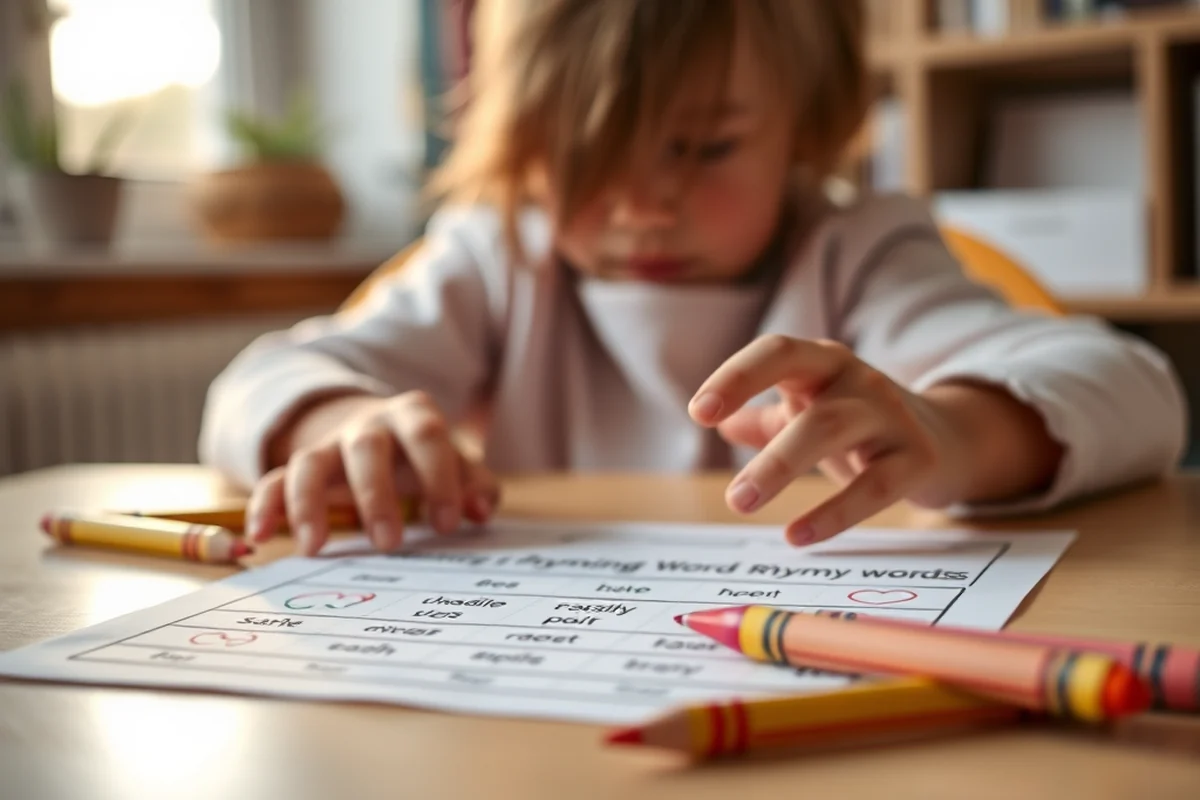
One of my favorites is the 'Rhyming Match' game. I use a set of cards with pictures and have my son match the rhyming pairs. For example, 'dog' with 'log' or 'sun' with 'fun.' He loves the challenge, and it’s a great way to build his vocabulary.
Another approach is to use household objects. If you have a basket of items, you can ask your child to find things that rhyme. For instance, 'can' with 'fan,' or 'ball' with 'wall.' It makes learning fun and connects it to the real world around them.
I also use songs and rhymes that my child already knows, like the alphabet song or 'Twinkle Twinkle Little Star.' We change the ending words to make rhymes. Helps him think creatively and practice pronunciation.
Play is the best teacher when it comes to rhyming words.
Related: How to teach cvc words for kindergarten
Related: English teaching for kids near me
Related: What is word search for kids
Related: Teach your children lyrics
Making the Most of Rhyming Games
I’ve noticed that rhyming games work best when they’re interactive and allow the child to take the lead. For instance, when we play 'Rhyme Time,' I say a word, and my son has to come up with a rhyme. It’s not only fun, but it also gives him a chance to show off his growing vocabulary.
It’s important to use rhymes that are familiar to the child. If the words are too difficult or unfamiliar, it can be frustrating. I’ve found that using rhymes from books, songs, or things we do together is more effective.
I also make sure to vary the types of rhymes I use. Sometimes we focus on ending sounds, other times on the beginning. This keeps the activity fresh and helps the child understand the different parts of a word.
Sing rhyming songs like 'The Wheels on the Bus' or 'Bingo' with your child. Change the rhyming parts of the lyrics and encourage your child to sing along. This builds memory and listening skills in a fun way.
“I remember the first time my son, then three years old, said, 'I like the cat, but I don’t like the bat.' It was a…”— Teaching Vocabulary to Kids editors
Related: Educational word games for kids
Using Technology to Reinforce Rhyming Words
I’ve used educational apps with my son that focus on rhyming words. These apps often have games where the child has to match rhyming pairs or hear the correct pronunciation. The immediate feedback is helpful and keeps the learning process engaging.
I’ve found that interactive rhyming games on tablets or computers can be especially useful for kids who are visual learners. For example, one app I used had animated characters that would say a word and then ask the child to choose the rhyming picture from a set of options.
While I don’t recommend too much screen time, I do think that technology can be a valuable supplement to traditional rhyming activities. It offers variety and helps reinforce learning in a different way than books or games alone.[3]
Rhyming Words and Language Development
I’ve seen how my son’s ability to create rhymes has improved over time, and it’s directly correlated with his growing vocabulary. He’s now able to make rhymes that are more complex and even use them in sentences.
This kind of language development is essential for reading and writing. When children understand how words work, they’re more likely to be successful in school. Rhyming helps them see the patterns in language, which is a key part of reading instruction.
I also notice that rhyming helps with memory. My son can remember rhymes from books or songs for a long time, which means that the learning is sticking. This kind of memory is important for academic success later in life.
Encouraging Creativity Through Rhyming
When I encourage my son to come up with his own rhymes, he often comes up with surprisingly clever pairings. It’s not just about learning the words—it’s about thinking creatively and understanding the rhythm of language.
I’ve started giving him challenges, like coming up with rhymes that start with a particular letter or that include a specific word. This not only helps him learn new words but also gives him a sense of accomplishment when he gets it right.
Creativity is a key part of learning, and rhyming words are a great way to nurture that. When children play with language, they’re not just learning—they’re expressing themselves in a unique way.
When kids play with rhymes, they're not just learning—they're expressing themselves.
Measuring Progress and Celebrating Success
I’ve started keeping a small journal where we record the rhymes my son comes up with. It’s a way to see how far he’s come and to celebrate his achievements. When he sees his progress on paper, he’s more motivated to keep learning.
I also use simple charts or stickers to mark his progress. For example, every time he comes up with a new rhyme, he gets a sticker. This makes the learning process more tangible and fun.
Celebrating success is an important part of the learning journey. When children feel proud of what they’ve learned, they’re more likely to continue exploring and building on their knowledge.
🖼️ Rhyming Picture Match Game
A hands-on activity where children match rhyming picture cards, helping to reinforce visual and auditory learning.
🕵️ Rhyme Scavenger Hunt
A fun, active game where children search around the house for items that rhyme with a given word.
🎰 Rhyming Word Bingo
A printable bingo game that helps kids recognize and say rhyming words in a fast-paced, engaging format.
🏃 Group Rhyming Relay
A team-based activity that encourages kids to work together to find rhyming pairs in a relay race format.
📖 Rhyming Story Time
An extension activity where children use rhyming words to create their own short stories or poems.
| The mistake | Why it happens | The fix |
|---|---|---|
| Forcing rhyming words on a child without context | This can be overwhelming and lead to resistance or frustration. | Introduce rhyming in a playful and natural way, using books, songs, and games that your child already enjoys. |
| Using rhymes that are too complex for the child’s level | This can confuse or discourage the child and make learning feel unattainable. | Choose rhymes that are familiar and match the child’s vocabulary and developmental stage. |
| Over-relying on technology without balancing with hands-on activities | Too much screen time can reduce the opportunities for interactive, real-world learning. | Use technology as a supplement, not a replacement. Combine it with hands-on games and activities for a well-rounded approach. |
| Ignoring the child’s natural rhythm and pace of learning | Every child learns differently, and pushing too hard can lead to burnout or disinterest. | Be patient and let the child learn at their own pace. Celebrate small successes and encourage exploration without pressure. |
Teaching Rhyming Words To Kids
Common Questions
What age is best for starting to teach rhyming words?
How long should a rhyming activity last?
Can rhyming help with reading skills in the long run?
What if my child doesn’t seem interested in rhyming activities?
References
- CA PTKLF Language and Literacy Development (cde.ca.gov)
- New York State Early Learning Guidelines (ccf.ny.gov)
- Early Childhood Outcomes and Prekindergarten Guidelines Alignment (spedsupport.tea.texas.gov)
Cite this guide
Teaching Vocabulary to Kids (2026). Teaching Rhyming Words To Kids. https://wordplayroom.com/teaching-rhyming-words-to-kids/
Feel free to cite or share this guide.