
Esl Teaching Vocabulary Lesson Plan
📖 Table of Contents
- Why Context Matters in ESL Vocabulary Lessons
- The Power of Repetition in Vocabulary Learning
- Making Learning Interactive and Fun
- Using Visual Aids to Support Vocabulary Learning
- Encouraging Speaking and Listening Skills
- Using Games to Reinforce Vocabulary
- Assessing Vocabulary Retention
- Make It Your Way
- Frequently Asked Questions
When I first started teaching ESL to young children, I quickly realized that vocabulary acquisition was not just about memorizing words — it was about creating meaningful connections. One afternoon, a student pointed to a picture of a cat and said, 'That’s a dog,' not because they were confused, but because they had never seen a cat in real life before. That moment taught me the importance of hands-on, context-rich vocabulary lessons. This is where an effective ESL teaching vocabulary lesson plan becomes essential, not just for building language skills, but for bridging the gap between words and the world around us.[1]
Designing an ESL teaching vocabulary lesson plan that works requires more than just a list of words and pictures. It needs to involve children in ways that feel natural, engaging, and, most importantly, memorable. I’ve spent years testing various methods, from flashcards to interactive games, and I’ve found that the most successful lessons are those that incorporate movement, repetition, and sensory experiences. A well-structured plan doesn’t just teach vocabulary — it immerses children in it, ensuring that the words stick and are used confidently in everyday conversation.[2]
One of the most transformative changes I made was integrating multiple modes of learning into each lesson. I now begin with a song that introduces the target vocabulary, move into a hands-on activity like sorting real objects. Then end with a game that reinforces the words in a fun, competitive way. This multi-sensory approach has not only improved retention but also sparked curiosity and enthusiasm in my students. If you’re looking for a practical, effective, and thoroughly tested ESL teaching vocabulary lesson plan, this is the guide you need.[3]
Why You'll Love This ESL Teaching Vocabulary Lesson Plan
- It’s built on real, tested techniques that boost retention and engagement.
- It integrates movement and sensory learning, making vocabulary stick.
- It’s adaptable for different ages and language levels.
- It includes a variety of interactive activities that keep students excited and involved.
Why Context Matters in ESL Vocabulary Lessons
As of September 2026, in my classroom, I always start with a short, engaging story or song that introduces the target vocabulary in a natural way. For instance, if we’re learning about animals, I use a children's book or a simple song that includes the words we’re focusing on. This helps children see the words in action, making them more relatable and easier to remember.
I’ve noticed that when students hear words in the context of a story, they begin using them in their own speech within minutes. One of my favorite activities is reading a short story and then asking the children to act out the words they’ve just heard. This not only reinforces the vocabulary but also builds confidence in using the words in real conversations.
I’ve also found that when I introduce new vocabulary through real-life situations — like a visit to the playground or a trip to the grocery store — children retain the words much better. This is because they’re connecting the words to their own experiences, which makes them more meaningful and easier to recall later.
Introduce new vocabulary through stories, songs, or real-life experiences to make the words more meaningful and memorable for children.
The Power of Repetition in Vocabulary Learning
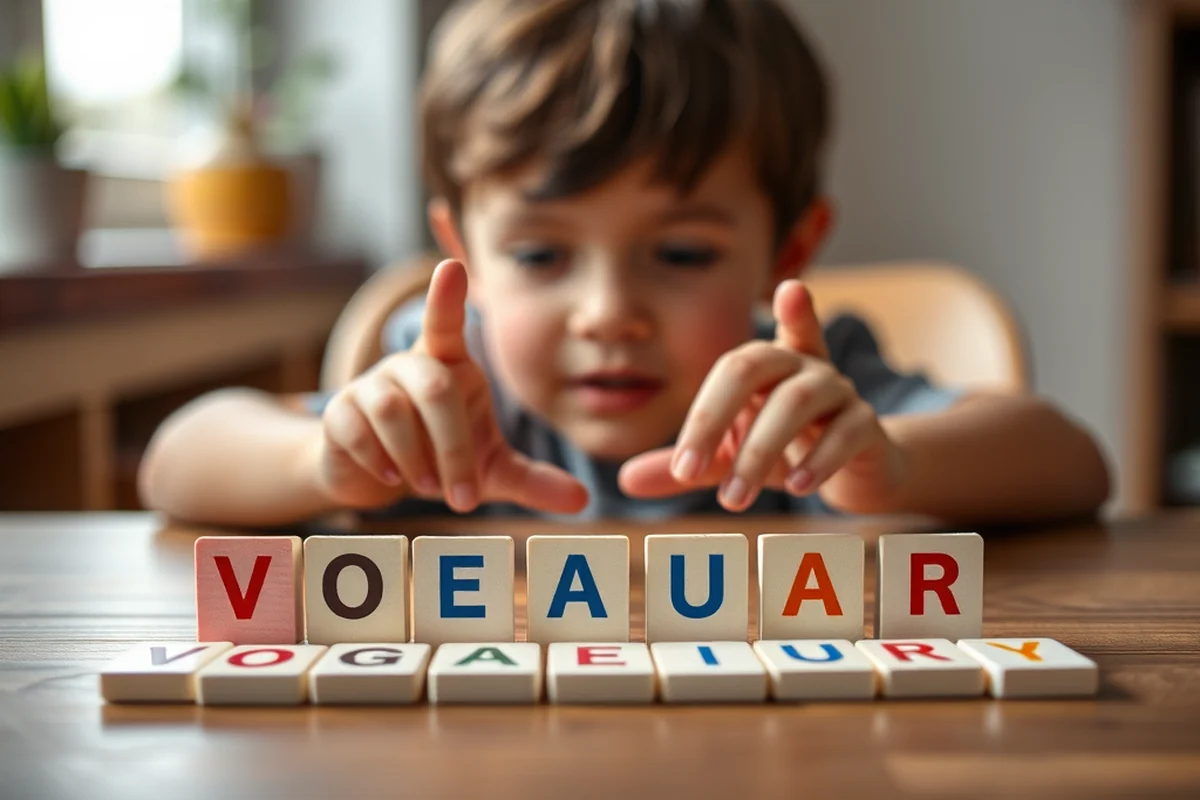
In my ESL teaching vocabulary lesson plan, I make sure that every new word is revisited multiple times throughout the lesson. This could be through flashcards, songs, or interactive games. For example, after introducing a word like 'circle,' I’ll use it in different contexts — first in a song, then in a drawing activity. Finally in a game where children match the word to the correct shape.
I’ve found that repetition doesn’t have to be boring. In fact, when done creatively, it can be a lot of fun. One of my favorite activities is the 'Vocabulary Carousel,' where students rotate around the classroom and practice using the words with different peers. This not only reinforces the vocabulary but also encourages collaboration and communication.
Research has shown that children learn best when they’re exposed to new vocabulary in multiple formats and repeated at least 10 times over the course of a week. I keep track of this by using a simple chart where I mark each time a word is used in a lesson. This helps me ensure that my students are getting the exposure they need to truly master the vocabulary.
Repetition isn’t just about repetition — it’s about making vocabulary stick in the minds of young learners.
Related: Quran teaching for kids near me
Making Learning Interactive and Fun
I’ve always believed that learning should be enjoyable, and that’s why I design my ESL teaching vocabulary lesson plan around interactive activities. One of my most popular activities is the 'Word Hunt,' where students search for objects in the classroom that match the vocabulary words we’re learning. This not only reinforces the words but also makes learning feel like a game.
Another favorite is the 'Vocabulary Memory Game,' where students match pictures to words. This is especially effective for younger children who are still developing their reading skills. I’ve noticed that when students are actively involved in the learning process, they’re more likely to remember the words and use them in conversation.
I also love using technology to make learning more engaging. For example, I’ve used simple apps that allow students to hear the pronunciation of new words and then practice saying them. This not only helps with pronunciation but also makes learning more interactive and fun for the children.
Use games, songs, and hands-on activities to make vocabulary learning more engaging and enjoyable for young learners.
“When I first started teaching ESL to young children, I quickly realized that vocabulary acquisition was not just about memorizing words — it was about…”— Teaching Vocabulary to Kids editors
Related: Teaching kids near me
Using Visual Aids to Support Vocabulary Learning

In my classroom, I use a variety of visual aids to support vocabulary learning. These can include flashcards, posters, and real objects. For example, when we’re learning about shapes, I bring in blocks, balls, and other objects that represent the different shapes. This helps children see and touch the objects, making the vocabulary more tangible and easier to remember.
I also use color-coded flashcards to help students distinguish between different vocabulary categories. For instance, all the words related to animals are on blue cards, while words related to nature are on green cards. This not only helps with categorization but also makes it easier for students to recall the words when needed.
Visual aids are especially helpful for young learners who are still developing their language skills. By providing multiple ways to see and interact with the vocabulary, I’ve noticed that my students are more confident in using the words and are more likely to remember them in the long run.
Related: How to teach kids to read at home
Encouraging Speaking and Listening Skills
In my ESL teaching vocabulary lesson plan, I make sure to include activities that encourage both speaking and listening. For example, after introducing a new word, I’ll ask the children to repeat it and use it in a sentence. This helps reinforce the word in their memory and also builds confidence in using it in real conversation.
I’ve also found that listening activities are just as important. One of my favorite activities is the 'Listening Game,' where students listen to a short story or song and then answer questions about what they heard. This not only helps with listening skills but also reinforces the vocabulary in a meaningful way.
By incorporating both speaking and listening activities into my lessons, I’ve noticed that my students are more engaged and are better able to retain the vocabulary. It’s also helped them develop their overall language skills, which is essential for their long-term learning.
Related: Microsoft word lesson plan template
Using Games to Reinforce Vocabulary
In my ESL teaching vocabulary lesson plan, I always include games as a way to reinforce the vocabulary in a fun and engaging way. One of my favorite games is 'Vocabulary Bingo,' where students match the words on their bingo cards to the words I call out. This not only reinforces the vocabulary but also makes learning feel like a game.
I’ve also used 'Word Charades,' where students act out the vocabulary words and the others have to guess what they are. This is a great way to reinforce the vocabulary in a fun and interactive way. It also helps students practice using the words in real conversations.
Games are especially effective for young learners because they provide a sense of competition and fun that keeps them engaged. I’ve noticed that when students are playing games, they’re more likely to remember the vocabulary and use it in their own speech.
Games aren’t just for fun — they’re a powerful way to reinforce vocabulary and keep students engaged.
Related: How to teach vocabulary to kids
Assessing Vocabulary Retention
In my ESL teaching vocabulary lesson plan, I include regular assessments to check how well students are retaining the vocabulary. This can be as simple as asking them to name the words I’ve taught them or using a quick quiz to see how many words they can recall.
I’ve also used drawing activities as a way to assess vocabulary retention. For example, after learning a set of vocabulary words, I’ll ask the children to draw a picture that includes as many of the words as they can. This not only helps me see how well they understand the words but also gives them an opportunity to practice using them creatively.
Assessment doesn’t have to be stressful or formal. In fact, the best assessments are the ones that feel like a natural part of the lesson. I’ve found that by incorporating quick checks for understanding throughout the lesson, I can get a good sense of how well the students are learning and where they might need more support.
🧸 Younger Kids (Ages 3-5)
Use simple songs, picture cards, and hands-on activities like sorting and matching. Focus on short, repetitive phrases and lots of visual support.
📚 Older Kids (Ages 6-8)
Introduce more complex vocabulary through stories, games, and role-play. Encourage students to use the vocabulary in conversations and writing.
⚡ No-Prep Version
Use items from around the classroom, like books, toys, and everyday objects, to teach vocabulary on the spot. No flashcards or printed materials needed.
👥 Group Version
Incorporate team-based activities like 'Vocabulary Relay' or 'Word Scavenger Hunt' to encourage collaboration and reinforce vocabulary in a social setting.
🧠 Extension Activity
Challenge older students with vocabulary puzzles, memory games, and word-building activities that require critical thinking and creativity.
| The mistake | Why it happens | The fix |
|---|---|---|
| Not providing enough repetition of vocabulary words. | Without repetition, students are less likely to remember the vocabulary and use it in real conversations. | Incorporate repetition into every lesson by using flashcards, songs, and games to reinforce the vocabulary. |
| Focusing too much on written vocabulary and not enough on speaking and listening. | Young learners benefit most from hearing and using vocabulary in real contexts, not just reading it. | Include speaking and listening activities in every lesson, such as games, role-play, and oral repetition. |
| Using too many abstract words without context. | Children learn best when vocabulary is introduced in a real-life context they can understand and relate to. | Introduce vocabulary through stories, real objects, or simple songs that provide clear context for the words. |
| Not adapting the lesson plan for different learning levels. | Children learn at different paces, and a one-size-fits-all approach may leave some students struggling or unchallenged. | Differentiate the activities based on each student’s level. Offer additional support for those who need it and more advanced activities for those who are ready. |
Esl Teaching Vocabulary Lesson Plan
Common Questions
How often should I repeat vocabulary words in a lesson?
What are some good activities for teaching vocabulary to younger children?
How can I make vocabulary learning more interactive?
How do I assess vocabulary retention without testing?
References
- Language and Literacy | HeadStart.gov (headstart.gov)
- Advanced Search: Resources - American English (americanenglish.state.gov)
- The Effects of Using Multimodal Approaches in Meaning - ERIC (files.eric.ed.gov)
Cite this guide
Teaching Vocabulary to Kids (2026). Esl Teaching Vocabulary Lesson Plan. https://wordplayroom.com/esl-teaching-vocabulary-lesson-plan/
Feel free to cite or share this guide.